

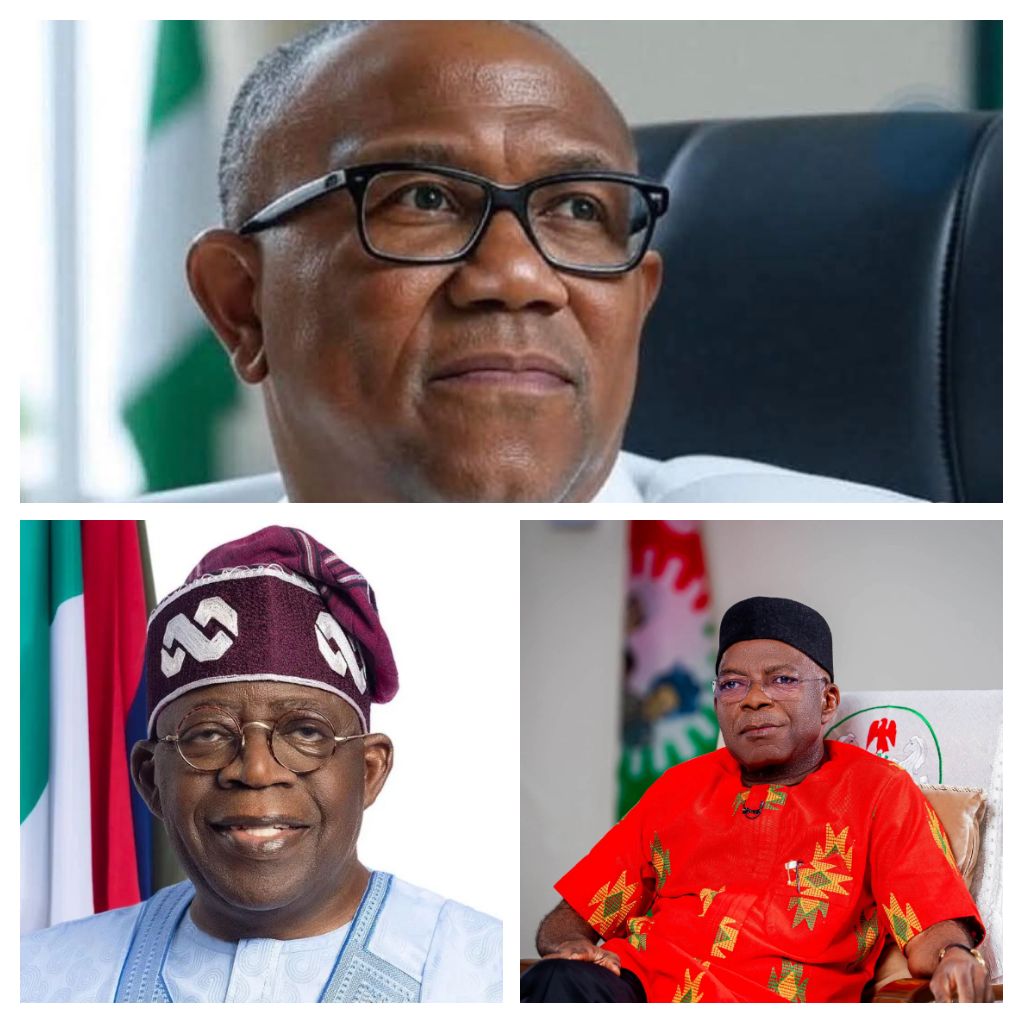
By Christopher Maduka
The political tsunami unleashed by Peter Obi in the 2023 presidential election did something extraordinary to Nigerian politics. It shattered the comfortable assumption that power belonged only to godfathers, party chieftains and candidates who had spent decades building machinery. Nigerians who had been written off as electoral spectators became participants in a revolt that sent shock waves through the establishment.
The Labour Party became the vehicle of that revolt. In Kaduna State, Donatus Mathew, popularly known as an Okada rider and reported to have once served as a councillor, defeated a four term incumbent to win the Kaura Federal Constituency seat in the House of Representatives.
In the Federal Capital Territory, Ireti Kingibe rode the same wave to the Senate. Other Labour Party candidates won seats in the National Assembly and state legislatures on the strength of the energy Obi’s candidacy generated.
The lesson was unmistakable: a determined electorate can overturn conventional political calculations.
In Abia State, Alex Otti was one of the principal beneficiaries of that realignment. His 2023 victory was a triumph of perseverance, but it was also part of a wider revolt against the political establishment. The Obidient movement gave the Labour Party unprecedented visibility, energised its supporters and persuaded millions that it was a credible alternative to the status quo. Otti did not win in a vacuum. Which makes hispresent double game impossible to ignore.
A governor who will not say who he is voting for Three years after that historic election, Abians are entitled to ask a simple question. Is Alex Otti aligned with Peter Obi’s aspiration for 2027, or is he quietly positioning himself for another four years of Bola Tinubu? This is not an academic exercise. It is a matter of political integrity, democratic accountability and respect for the voters who put him in Government House.
In September, 2026, Otti had allegedly declared he was not in a position to oppose Tinubu’s second term bid. Speaking in an interview released by Arise News, he argued that cooperation with the Federal Government should not be mistaken for partisan endorsement. He said he had a presidential candidate he was expected to support, while stressing that Tinubu had the constitutional right to seek reelection.
On the surface, that sounds measured. Governors must work with Abuja whatever the party colours. Roads must be built, security must be coordinated and federal allocations must be secured. Nobody sensible expects Otti to wage a needless war against the President to prove his opposition credentials.
However, there is a world of difference between cooperating with a president and declaring yourself unable to oppose his reelection. One is constitutional duty. The other is a political statement, and a loud one. Why would a governor elected on an opposition platform be so careful to explain why he cannot oppose the ruling party’s candidate, yet so reluctant to name the opposition candidate he says he will support? Otti says he has a presidential candidate. Who is it? Can he say the name without footnotes, qualifications and a lecture on why his relationship with the incumbent must not be misunderstood?
The campaign council list that changes the conversation Then came October 14, 2026. President Tinubu inaugurated his expanded Presidential Campaign Council at the Banquet Hall of the Presidential Villa in Abuja, a council deliberately stretched to include figures from other parties, among them Nyesom Wike, Governor Ademola Adeleke and Governor Chukwuma Soludo. This was no ordinary
party roll call. It was a broad coalition built to swallow the opposition space.
On the list, according to The Whistler, was Comrade Onyebuchi O. Chukwu, Special Assistant to Governor Otti on Youth Development, named as a general member of the council. He told the newspaper he was surprised, that nobody had consulted or informed him, and that he had received no directive from the governor on the matter.
He also pointed to confusing entries on the list, where a similar name appears in more than one place. Give the aide his due. His explanation deserves to be heard, and no one should pretend that a name on a published list is the same as a signed oath, but let us be blunt about what this episode exposes.
A member of the Otti administration appears on the official campaign roster of the man Otti says he cannot oppose, and the governor who is so eloquent about why he cannot oppose Tinubu has so far said nothing that settles the matter. The aide says he got no directive from his principal. Fine. Then the governor owes Abians a directive now. Will his appointees serve on Tinubu’s campaign council or will they not? Does he approve, or does he not?
If more appointees or aides from the Otti camp have been drawn into that structure, Abians deserve to know their names and to hear the governor say, in plain language, whether they act with his blessing. Silence on this question is not neutrality. In politics, silence in the face of such a listing is a message, and voters are entitled to read it.
When an opposition governor says he cannot oppose the President, when one of his own aides turns up on the President’s campaign list, and when the governor will not name his candidate, the pattern is not hard to see. Whether by design or by drift, it looks like a man keeping a foot in each camp.
From the Obi tsunami to political ingratitude? Let us be clear. Peter Obi did not personally manufacture every Labour Party victory in 2023, and the electorate should not be reduced to blind loyalty to one man. Otti had his own record, supporters and grassroots appeal.
He fought a hard battle and earned his mandate, but it would be intellectually dishonest to pretend the Obi phenomenon had no bearing on the environment in which Otti triumphed.
Millions of Nigerians, especially young people, professionals and previously disengaged voters, rallied around an alternative to the established parties. That energy lifted candidates whose individual prospects might otherwise have been far dimmer.
Otti’s victory belonged to Abians, but it was also part of that wider moment. For a beneficiary of that movement to be so reluctant to separate himself from the establishment it set out to challenge is, frankly, an insult to the good people of Abia State who made it happen.
No one is saying Otti owes Obi personal obedience, or that the Obidient movement is owed perpetual allegiance, but independence is not evasiveness. A leader can disagree with his allies. He can change his mind. He can even back a former opponent. What he cannot do is demand that the electorate treat such choices as inconsequential and stop asking questions.
A trail of hedging
Consider the sequence. In January 2026, Otti said he remained in the Labour Party but added the now familiar line that nobody knows what tomorrow holds. In February, he insisted the party remained a formidable force despite Obi’s departure. In July, he rejected Hope Uzodimma’s claim that South East governors had agreed to back Tinubu’s reelection.
In September, he said he was not in a position to oppose Tinubu. In October, a member of his administration surfaced on Tinubu’s campaign list.
Taken one by one, each can be explained. Taken together, they form a pattern that no amount of careful phrasing can hide. Yes, Otti has every right to determine his position independently of other South East governors, and Uzodimma cannot speak for him, but independence from Uzodimma does not prove allegiance to Obi.
Rejecting someone else’s endorsement of Tinubu is not the same as endorsing an alternative. Saying you belong to the Labour Party is not the same as committing to the project that made the
party formidable.
This is the face of Janus: one profile turned toward the Labour faithful who delivered Abia, the other turned toward Abuja and the incumbent. A governor cannot forever enjoy the goodwill of one constituency while keeping the door open to its principal opponent.
Cooperation is not capitulation Nigerian governors routinely deal with the Federal Government on funding, infrastructure, security and economic policy. That is not betrayal.
Refusing to work with the President because he belongs to another party would be irresponsible, but cooperation must not become a convenient cover for submission. A genuine opposition
governor can applaud a sound policy and condemn a ruinous one. He can accept
federal support while demanding accountability.
He can keep a working relationship with the President and still campaign against his reelection if he believes another candidate would serve Nigeria better. That is what political maturity looks like.
Otti’s argument that the fuel subsidy was unsustainable without adequate funding is a policy position that can be debated on its merits. It is not, by itself, an endorsement. The problem is not that he agrees with Tinubu on some policies.
The problem is that his constant explanations of why he cannot oppose Tinubu, now compounded by the appearance of his own aide on the Tinubu campaign list, have created a cloud of his own making.
If his position is principled, why is clarity so hard? Abians did not elect Otti to become an appendage of the Federal Government. They elected him to govern Abia and to exercise independent judgment in the national interest.
The Federal Government does not own Abia’s political future, and cordial relations with Abuja do not require Abia’s governor to leave his own people guessing about a consequential presidential election.
What his supporters are asking
For many Abians who identify with Obi’s message, the prospect of Otti drifting into the Tinubu camp would be deeply disappointing. For them, Obi represents the hope of a different political culture: greater fiscal discipline, more accountable leadership and a break from the entrenched practices of Nigeria’s dominant establishment.
Whether Obi can deliver on those expectations is a separate question, and his record must be scrutinised like anyone else’s. But the aspiration is real.
To the supporters who propelled the Labour Party into national prominence, any Otti accommodation of Tinubu would force an ugly question. Was 2023 a mandate for change, or merely a temporary vehicle for individual politicians to capture office? Was that energy a genuine demand for a new direction, or an electoral resource to be harvested when useful and discarded when inconvenient?
These are uncomfortable questions. They are also legitimate. Otti is entitled to disagree with Obi. He is entitled to conclude that Tinubu deserves another term. He is even entitled to strike an alliance that disappoints the people who supported him. What he is not entitled to is applause without explanation.
Alex Otti cannot have it both ways Ambiguity is not always sophistication. Sometimes it is simply ambiguity, and sometimes it is calculation dressed up as statesmanship. He cannot insist that nobody should mistake his cooperation with Tinubu for endorsement while his appointees show up on Tinubu’s campaign list and he declines to say where he stands.
He cannot expect Abians to admire his independence from other governors while denying them the right to interrogate his own intentions. And he cannot expect the goodwill generated by the 2023 Labour Party movement to remain at his disposal regardless of the choices he makes in 2027.
The burden of clarity rests with him. This matters beyond the personalities involved.
Nigeria’s opposition politics is already battered by defections, party crises and competing ambitions. If Otti believes the Labour Party can survive as an independent force, he must show Nigerians what that independence means in practice. Will he back the party’s presidential candidate, and does that commitment survive Obi’s departure?
Will he back whichever candidate best serves the national interest, and by what criteria? Or does he intend to preserve the Labour Party’s identity in Abia while pursuing a separate arrangement with Abuja?
My final word to Governor Otti
Governor Otti, Abians are not asking you to fight President Tinubu. They are not asking you to jeopardise federal projects or turn governance into a permanent rally. They are asking you to stop making a simple question complicated.
Tell us whether your appointees on that campaign council have your blessing. Tell us whether you will direct them to step down or to stay, and tell us, without a lecture, whose presidential project you will support in 2027.
If you support Obi, say so. If you support Tinubu, have the courage to say so. If you back someone else, name him. If you are undecided, admit it, and stop dressing uncertainty up as political philosophy.
Do not mistake the patience of Abians for naivety. The Obi tsunami of 2023 proved that Nigerian voters can surprise politicians who believed outcomes were theirs to manage. It helped create opportunities for candidates across the country, including you.
The electorate can reward a politician, and it can punish one. It can celebrate your performance as governor while refusing to hand you a blank cheque on presidential politics.
Until you give a straight answer, the suspicion that you are preparing to accommodate a Tinubu second term will remain a problem of your own making. And if that suspicion is wrong, the easiest person to correct it is you.
Christopher Maduka can be contacted through chrismadu58@gmail.com
