

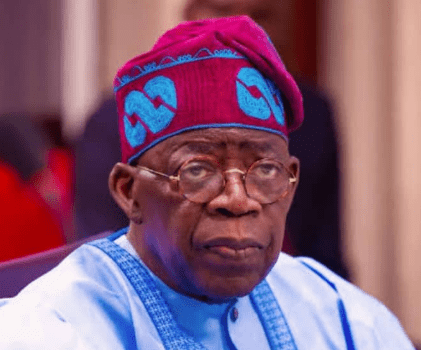
President Bola Tinubu on yesterday called on Nigerian media executives to extend their usual government scrutiny to both the state and local governments as rigorously as they monitor the federal government and his administration.
The president while speaking at the Presidential Villa, Abuja, while hosting media proprietors, executives, and members of the Nigeria Guild of Editors, said that states and local governments now enjoy greater financial autonomy under his administration, unlike before
He said his administration have opened up the principle of federalism to the extent that local governments are now getting their money directly.
He, however, stressed that it is now the duty of the mass media to scrutinize how they use it, and not just focus on the federal government alone. “It is in your hands, so don’t bombard me alone. Look at local governments too, and equally, the sub-national,” he said.
President Tinubu also made it clear that no state in Nigeria is currently borrowing to pay workers’ salaries, attributing the development to reforms implemented by his government.
“Yes, we can complain it’s not enough. We can complain we are not where we should be, but we have to manage what we have to sustain today, survive tomorrow, and make progress,” Tinubu added.
The president praised the media for their relentless criticism, describing it as a driving force that challenged him to perform better despite harsh commentary during his early days in office.
“Thank you for inspiring me and challenging me in critical moments of my life. You didn’t spare me, but you provoked the intellectual curiosity of a leader that must perform,” he said.
He admitted to reading newspapers daily, calling it “an addiction,” and confessed that he was initially “a little stubborn” at the start of his administration due to intense media scrutiny.
Speaking on policy making, including the removal of the petrol subsidy in May 2023, Tinubu defended his actions, saying tough choices were necessary to save Nigeria from economic collapse.
“The problem is leadership with responsibility of taking decisions at the time it was to be done. Otherwise, it’s a failure. At the time, we had to confront the subsidy. Nigeria was on the edge of bankruptcy,” he said.
He insisted that critics should not be seen as enemies but as contributors to nation-building, noting that their feedback reflects concern for the country’s welfare.
“I accept the asset and liability of my policies because I asked for the job and it was given to me. So I have to do it,” Tinubu stated.
Addressing challenges facing media organizations, particularly funding and tariffs, the President assured that the government would take necessary action to support the sector.
He concluded by reaffirming his commitment to national development and called for collective responsibility among leaders, media, and citizens.
