





Even a child born today is aware of it; even an older person suffering from amnesia has not forgotten that the name Imo State is synonymous with education, both basic and higher.
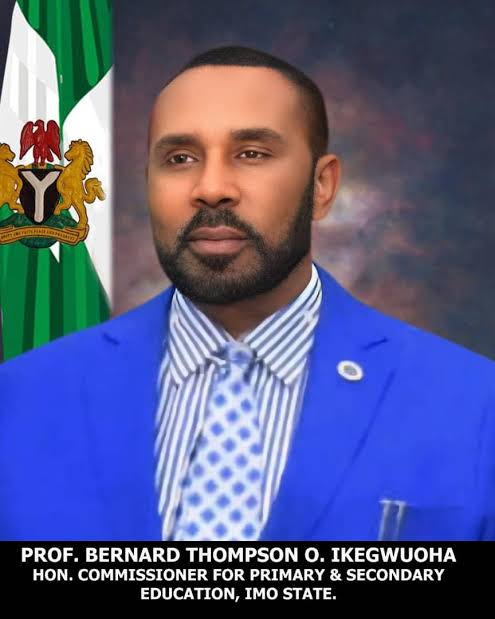
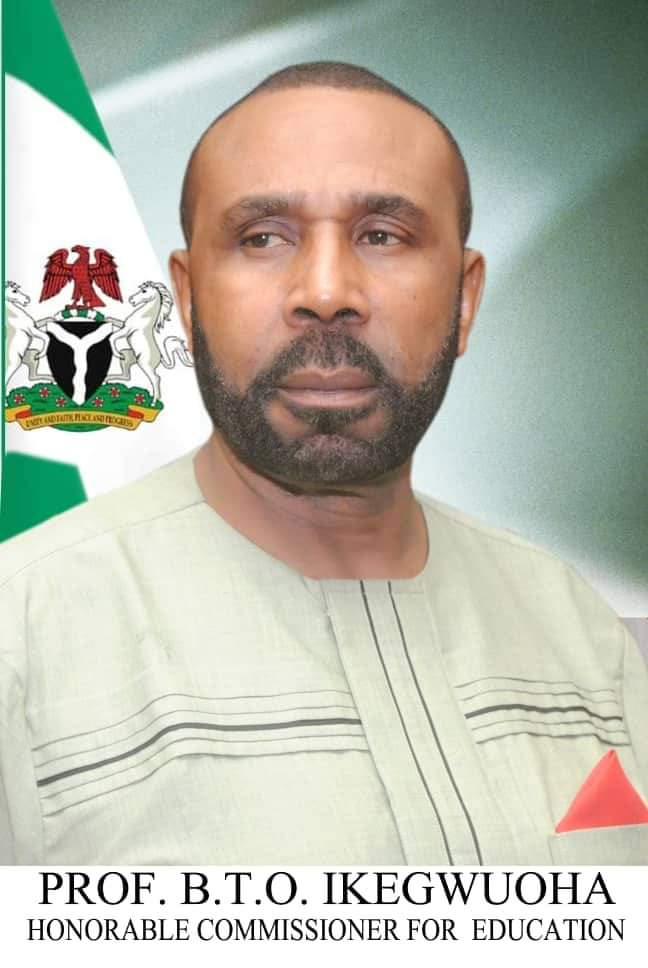
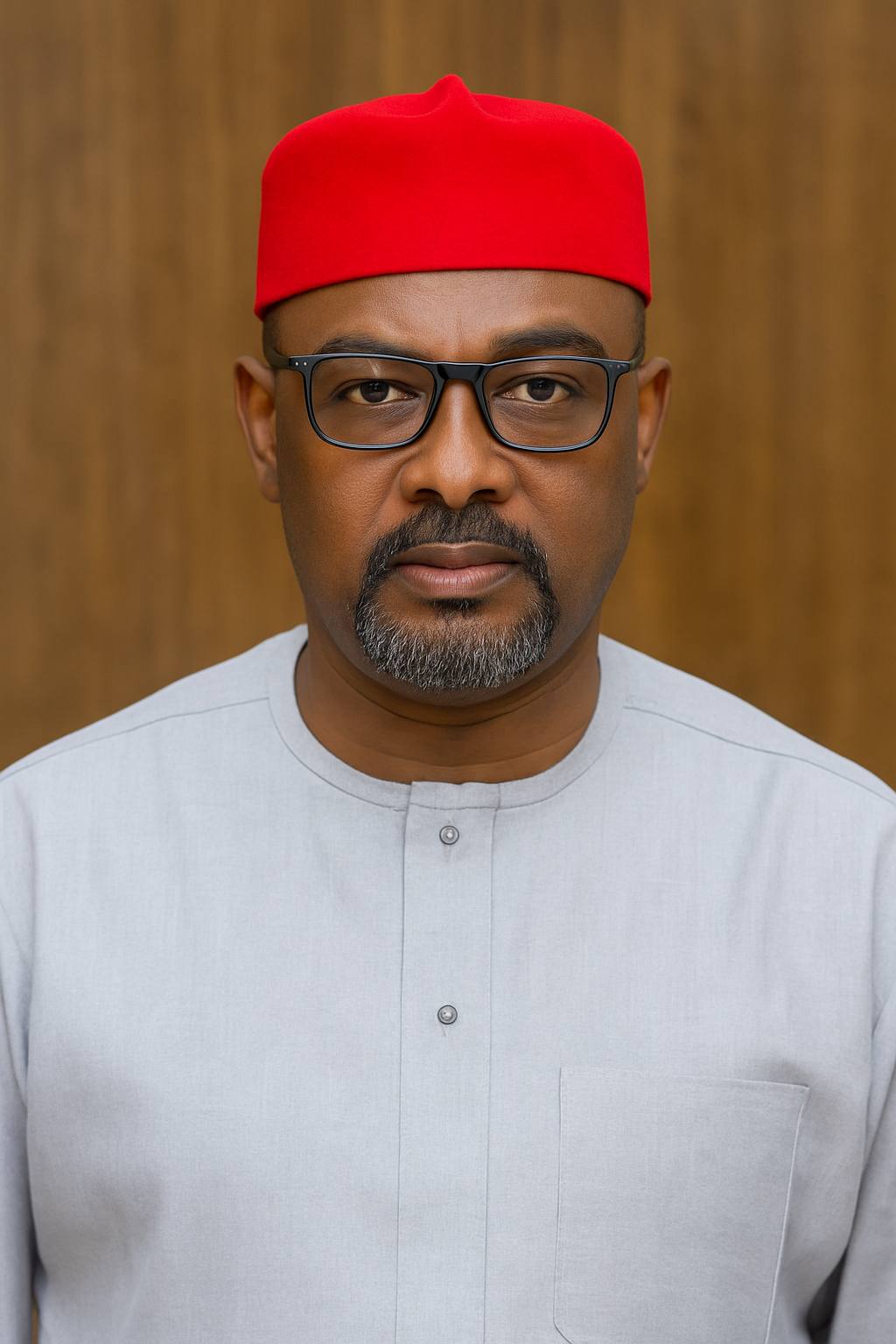
However, the appointment of Professor Bernard Thompson Onyemauchechukwu (B.T.O) Ikegwuoha as the Imo State Commissioner for Education (Primary and Secondary) in Governor Hope Uzodimma’s second term has yielded fruits.
Recall that Professor Ikegwuoha lost his place in the cabinet during the first-term cabinet reshuffling and was reappointed when Uzodimma won his second term in 2023, and since then, it has been achievements galore.
Teachers Recruitment and Retraining
The Imo State Commissioner for Education (Primary and Secondary), Professor B.T.O. Ikegwuoha, has announced that under him (2020-2026) he has recruited 5,770 teachers.
Speaking to journalists at the ministry’s headquarters in Owerri, Professor Ikegwuoha noted that the shared prosperity government of Governor Uzodimma has set a new standard for educational excellence, a feat many states across the federation have begun to emulate.
He declared that the ministry is operating as a “pathfinder” for education policy in Nigeria, referencing the administration’s innovative reforms that have gained national traction.
Ikegwuoha gave full credit to the visionary leadership and policy direction of the executive governor of Imo State, Senator Hope Uzodimma, and detailed a series of strategic interventions that have reformed teacher recruitment, boosted the ministry’s revenue base, and tackled deep-rooted systemic challenges.
Speaking specifically on teacher recruitment, Professor Ikegwuoha outlined a successful and transparent mass recruitment exercise that has significantly addressed the chronic manpower deficit in the state’s classrooms.
He disclosed that the ministry, with the governor’s express approval, has recruited a total of 5,770 teachers and 235 non-tutorial staff soon to be deployed across primary and secondary schools on a 60/40 ratio—60% to primary schools and 40% to secondary schools via the Secondary Education Management Board (SEMB).
DrumAfricanews reports that this move is particularly significant considering that, nationally, Nigeria is grappling with an acute shortage of over 194,000 teachers, a crisis the Nigeria Union of Teachers (NUT) has described as a “national emergency”.

According to him, they did not just recruit without focus. Everything was done intentionally as the recruitment exercise prioritised critical subject areas.
“We employ these teachers based on specific expertise that we require, such as physics, chemistry, biology, data processing, and agriculture, which dominated the recruitment exercise. We also hired English, literature, and Igbo teachers,” he explained.
According to him, “Today, what we are looking for is education that is steeped in research and STEM (Science, Technology, Engineering and Mathematics).”
The commissioner detailed a thorough selection process, noting that successful applicants were trained for six weeks at the Benjamin Uwajimogu College of Education, Ihitte Uboma, and are currently undergoing a final verification of their academic certificates before receiving their employment letters.
According to Professor Ikegwuoha, the recruitment anchored itself in a policy aimed at easing logistical burdens, because the teachers will be posted to schools within their local government areas—and where feasible, their own communities—to significantly reduce transportation costs.
Exponential Growth In IGR Of Education Ministry
Speaking on what he called exponential growth in internally generated revenue (IGR) of the ministry, Professor Ikegwuoha made a revelation that underscores the ministry’s financial regeneration and announced a massive leap in revenue generation.
According to him, from March 2024 to March 2025, the ministry’s IGR stood at N94.7 million. However, in the year under review (April 2025 to April 2026), the ministry has recorded an exponential increase, generating over N501 million naira.
He said that this achievement aligns with the state’s broader fiscal transformation, and based on the official data from the Imo State Internal Revenue Service, the state’s total IGR soared to an unprecedented N43.2 billion in 2025, the highest since the state’s creation in 1976.
DrumAfricanews reports emerging from the state have it that the governor’s economic blueprint, which saw monthly IGR rise from an average of N400 million in 2020 to more than N4 billion by 2025, has directly empowered the Education Ministry to strengthen its internal capacity through digitisation.
War Against Extortion and Illegal Operators
Professor Ikegwuoha revealed an ongoing war against illegal operators and extortionists within the education sector, stressing that the ministry has conducted a sweeping crackdown on illegal private schools, many of which were operating in residential apartments without valid approvals.

“A joint inter-departmental monitoring team comprising the Department of Quality Assurance, the Department of Universal Basic Education, and the Education Support Services Department was constituted to drive the process. Non-compliant schools were shut down, while others were compelled to regularise their operations.”
He added that in addition to these regulatory measures, the Imo State Ministry of Education has recorded remarkable successes in enhancing academic standards and curbing examination malpractice.
“The ministry’s aggressive crackdown on miracle examination centres has led to a significant drop in irregular enrolments and a restoration of credibility in both internal and external assessments.
“Furthermore, the introduction of continuous assessment reforms and teacher capacity-building programmes has improved learning outcomes across public schools.
“Early data indicates higher pass rates in national examinations and increased stakeholder confidence in the state’s education system.
“These achievements have not only strengthened foundational education but also positioned Imo as a model for ethical and quality-driven school administration in Nigeria.”
He said that in a bold move to curb the culture of impunity and extortion, the ministry established a public reporting mechanism, including two dedicated phone lines for citizens to report any untoward activities in the school system: 07074272304 and 07076593298.
The Commissioner personally noted that he had gone on undercover visits to schools, where he discovered rampant illegal cash collections by principals, including extortionate charges and demands for commodities like shovels, cutlasses, etc. as conditions for admission, stressing that such practices have been banned with immediate effect.
Landmark Textbook Use During Policy
On the landmark textbook reform adopted nationwide after Imo made the policy, Professor Ikegwuoha said that it is perhaps one of the most impactful policies introduced by the ministry.
He said that up until 2025, textbooks were changed indiscriminately by schools, forcing parents to spend as much as N80,000 per term on new books until Imo State intervened and introduced the landmark reform on textbook purchasing and duration, which curbed that national extortion.
He noted with concern that this practice had unknowingly led parents to establish libraries with unwanted books in their homes.
However, under the new directive, textbooks will now be changed every four years, allowing younger siblings to reuse the books of their elder siblings.
He said that this policy has been so successful that it has subsequently been adopted by many other states and even the federal government.
“We also declared that all textbooks cannot, should not, and must not have workbooks embedded in them. Again, the state and federal governments copied it,” Professor Ikegwuoha disclosed.
Digital Transformation and Examination Integrity
Speaking on digital transformation and examination integrity, he said the ministry has digitised the release of examination results, a major step towards transparency.
Professor Ikegwuoha announced that the First School Leaving Certificate (FSLC) results can now be accessed and printed online via the official portal: https://education.im.gov.ng.
“All examination fees for WAEC, NECO, Junior WAEC, Common Entrance, and FSLC are now paid exclusively online, eliminating cash handling and reducing opportunities for fraud.
“Additionally, a strict crackdown on examination malpractice, including the illicit “sorting” of results by students and parents, is ongoing.”
He concluded by reaffirming the state government’s commitment to providing quality and affordable education and reiterated that all policies are aimed at creating a more efficient, sustainable, and child-friendly learning environment, and he thanked Governor Hope Uzodimma for his unwavering support, strategic policy direction, and for making the numerous achievements possible.


