







From Mgbidi, Umuapu, Achingali, Akokwa, Okigwe and other boundary towns across Imo State, the people are beginning to feel the effects of smooth and steady movement for daily business transactions intra and inter state.
There is a saying that you never get a second chance to make a first impression. This simple truth applies not just to people, but to places as well.
For any state, especially Imo, the roads that lead you in are its front door; they are the first thing a visitor sees and the last thing a traveler remembers. That is why the efforts to rebuild Imo State’s entry roads is about so much more than just laying asphalt.
It is a statement of intent, a practical solution to everyday struggles, and a gamble on a better tomorrow.
If you have driven into Owerri from Onitsha to Mgbidi boundary, or travelled from Port Harcourt to Umuapu boundary, you understand the old frustration.
It was once a torturous experience as the journey was often defined by potholes that swallowed tires, endless traffic jams, and the gnawing fear of breaking down in a stretch.
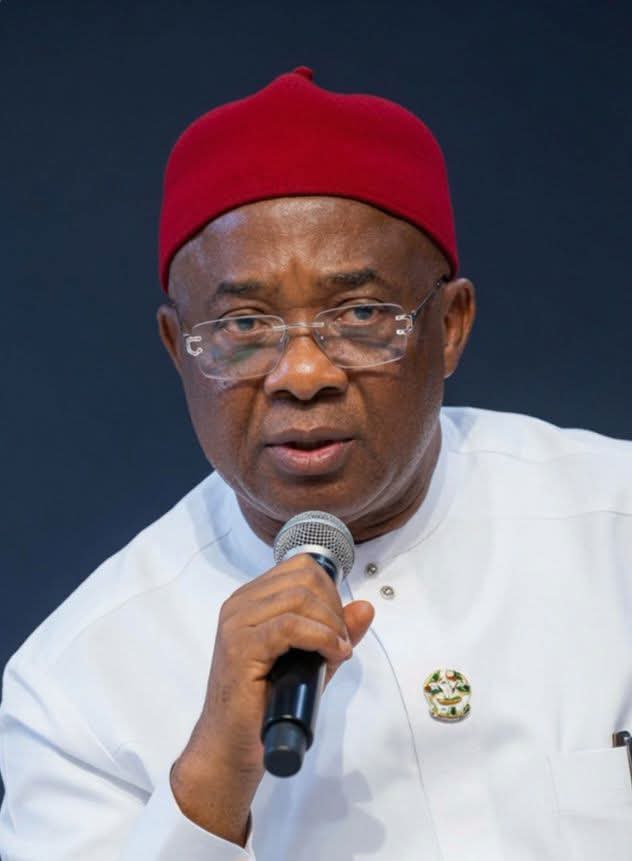
By fixing these critical arteries, Governor Hope Uzodimma is essentially sweeping the front porch and turning the lights on. It signals that Imo is open for business, that it is a place where order and progress are priorities.
South East is a region of many misgovernance, and in a region where bad roads have often been a symbolic and imagery, these new, smooth surfaces are a powerful rebrand.
They tell investors, tourists, and even returning sons and daughters that the state is moving forward, and that the Imo train has already left the station.
For Governor Hope Uzodimma, the thought process behind these projects is layered. On a basic level, good roads save lives. For years, insecurity thrived on the bad patches along highways like Orlu, Okigwe, and the Owerri-Port Harcourt road.
When a road is broken, vehicles slow down, creating perfect spots for ambushes, and they make it harder for security agencies to respond quickly to distress calls.
Rebuilding these routes is a direct security response; it is about making it harder for criminals to hide and easier for law enforcement to protect the people.
Beyond safety, there is a harsh economic reality at play. The Southeast is a fiercely competitive region. Anambra has its commercial prowess and Abia has its famous markets.
If the roads leading into Imo are terrible, people and goods will simply go around it. Transporters will avoid the route, businesses will think twice about setting up shop, and the local economy will bleed value.
By fixing these roads, the government is playing a defensive game. It is ensuring that Imo does not lose out on trade and investment to its neighbours.
As the old business adage goes, time is money,a good road is the quickest way to reduce travel time, cut down on vehicle damage, and lower the cost of moving goods.
This means cheaper food from rural areas and lower transport fares, which is a relief for every family’s budget.
The great writer Maya Angelou once observed that “Nothing will work unless you do.”
You will hear naysayers ask, “Why spend state funds on federal highways when our own local roads in Mbano or Ohaji are crumbling?” It is a fair question. But the argument for the entry roads is that they are the economic arteries of the state.
If an artery is blocked, nothing else in the body works. An investor judges the entire state by the first ten kilometres they drive. A bad gateway is a bad brand, plain and simple.
Whether the federal government reimburses the state is a game for later. For now, the play is to show the capacity of Imo State and deliver visible, tangible wins.
The signs of progress are already visible on the ground. The road from Owerri to Onitsha, which serves as the gateway to Anambra, has been completed. The same goes for the Owerri-Mbaise-Umuahia road, which opens up the route to Abia and even onwards to Akwa Ibom.
Travelers heading to Enugu or Abia through Okigwe will find that road finished as well. Work is nearing completion on the Orlu-Akokwa-Uga road and the vital Owerri to Port Harcourt corridor.
The only way to understand the significance of these projects is to see them not as mere government contracts, but as an answer to the daily prayers of thousands of commuters and traders who simply want to get home safely and quickly.


