



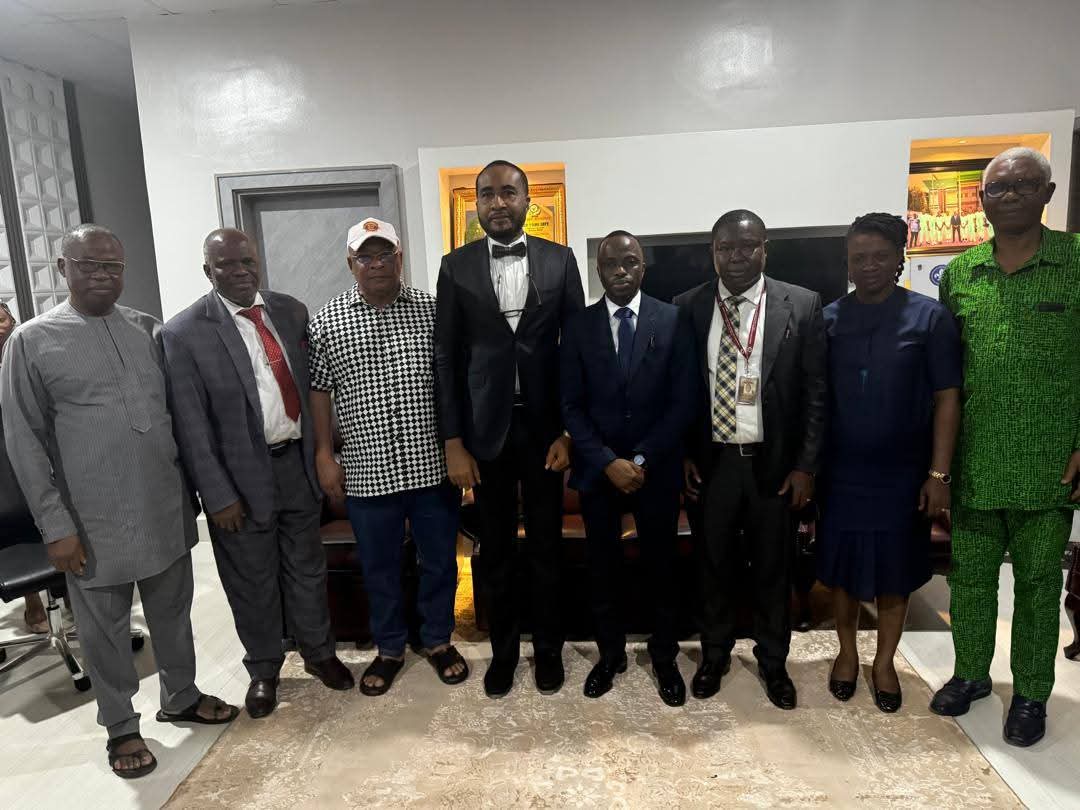
Information available to DrumAfricanews shows that the Medical and Dental Council of Nigeria (MDCN) has approved 350 students admissionquota for medicine and dentistry at the College of Medicine, Enugu State University of Science and Technology (ESUT), making it the highest allocation granted to any medical school in Nigeria.
As gathered, this approval came after a rigorous accreditation exercise conducted by a high-powered MDCN team, which assessed facilities, manpower, and training standards at the ESUT College of Medicine and its affiliated teaching hospitals.
Announcing the development in Enugu on Wednesday, the Deputy Registrar of the Council, Dr. Nnaemeka Nwakanma, said the decision was based strictly on verifiable improvements in infrastructure, personnel, and clinical training capacity, stressing that the Council does not accredit projections but tangible performance.


According to him, “We do not accredit intentions or dreams. We accredit what we see on ground as at the time of assessment.”
Nwakanma, who led the inspection team, expressed satisfaction with the scale of ongoing transformation at the university’s teaching hospital, describing it as a massive construction hub driven by purposeful leadership.
He said, “What may appear chaotic to the uninitiated is in fact a coordinated project site, with multiple developments progressing simultaneously across different sections of the hospital. It speaks volumes about leadership that prioritises results over rhetoric.”
The team leader commended the construction of a new Accident and Emergency Unit, noting that the Council had only recommended an expansion during its previous visit.
According to him, “The last time we came here, we complained about the Accident and Emergency Unit. All we said was for you to expand. We didn’t know that you were going to build a brand new Accident and Emergency Unit.”
The team as gathered, also inspected the upgraded Colliery Hospital and the 300-bed International Hospital, a major new medical facility in Enugu, which Nwakanma said could significantly contribute to reversing outbound medical tourism.
“We were not only stunned but we were in awe of the magnificence of the structure you are putting up here in the city of Enugu. Nigeria needs to know. Apart from the African Centre of Medical Excellence in Abuja, this hospital gives us hope for the possibility of actually reversing medical tourism in Nigeria,” he stated.
He reiterated that the quota system reflects the capacity of each institution’s facilities and teaching staff, warning that any attempt to exceed approved limits would attract sanctions.
“The number we approve is what your facilities and manpower can sustain. You can admit fewer, but never exceed it. The integrity of Nigeria’s medical training depends on strict adherence to these standards.”
The Vice Chancellor of ESUT, Prof Aloysius-Michaels Okolie, welcomed the approval and assured the Council that the university would address identified gaps without delay.
According to Okolie, “We will not produce half-baked medical personnel. The issues you raised will be addressed urgently. These are things that can be fixed within months.”
He added that the institution remained committed to upholding global best practices in medical education.


