




As the 2027 general elections approach, the Abia State government has urged Media houses and practitioners to be cautious of words, and focus on ethical journalism that will make the society a better place.
The government stressed that it emphasis on ethical journalism is because words can unite, divide, bring peace, set already volatile area ablaze as well as promote democratic participation or discourage people from excising their civic responsibilities.
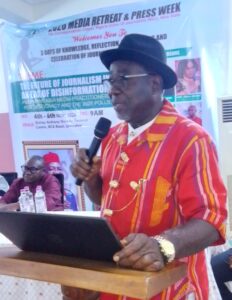
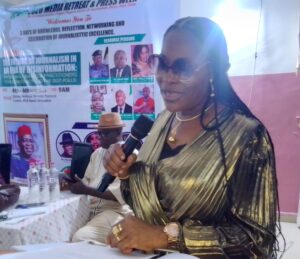
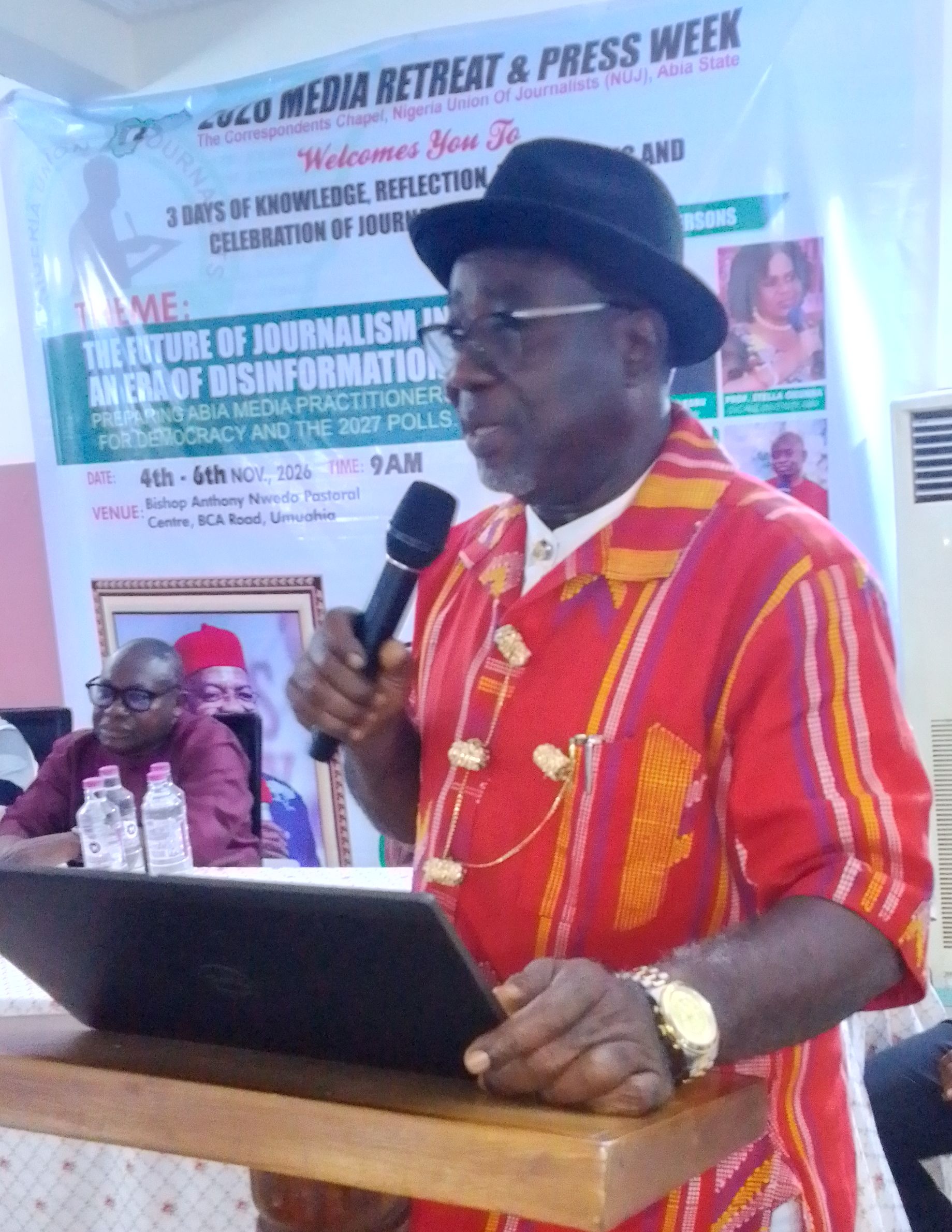
The Commissioner for Information, Prince Okey Kanu gave the advise during the opening day of the 2026 press week with the theme “The Future of Journalism in an Era of Disinformation: Preparing Abia Media Practitioners for Democracy and the 2027 Polls.”
Speaking at the three-day programme, which began today, Wednesday, November 4 and to end on Friday, November 6, 2026, at Bishop Anthony Nwedo Pastoral Centre, BCA Road, Umuahia, the commissioner saidnrhat the theme could not have come at a more appropriate time.
Kanu said that the theme speaks directly to one of the greatest challenges confronting our society today: the growing struggle between truth and falsehood, facts and fabrication, responsible journalism and the deliberate weaponisation of information.
“We are gathered here at a defining moment in the evolution of journalism, when the speed at which information travels is increasingly outpacing the diligence required to verify it.
“We live in an age where a smartphone can turn anyone into a publisher, a social media post can become a national controversy within minutes, and a fabricated story can travel across geographical boundaries before the truth has even left the newsroom.
“This reality places an enormous responsibility on professional journalists, particularly as Nigeria approaches another crucial electoral cycle in 2027.”
Kanu said that journalism has always been central to the survival and development of democracy.
He went further to describe journalism as the bridge between government and the governed, the watchdog that holds public institutions accountable, the platform through which citizens express their concerns, and the instrument through which society interrogates power and demands responsible leadership.
“A democracy without a credible and independent media is vulnerable to manipulation, misinformation and the abuse of public trust,” Kanu said
He, however, said that the media must equally understand that its influence comes with enormous responsibility, stressing that the freedom to report does not translate into the freedom to distort.
“The right to criticise does not confer the licence to misrepresent. And the obligation to hold government accountable must never be confused with the responsibility to manufacture narratives or promote falsehood.
“The credibility of journalism rests on its commitment to truth, accuracy, fairness, balance and professional integrity.”
The Commissioner added that in today’s information ecosystem, where unverified claims, manipulated videos, doctored photographs, misleading headlines and politically motivated propaganda are increasingly circulated as facts, the journalist must remain society’s most dependable compass.
According to Kanu, “the future of journalism will not necessarily belong to those who publish first, but to those who verify best. It will not belong to those who generate the loudest headlines, but to those whose reports can withstand scrutiny. And it will certainly not belong to those who sacrifice professional ethics on the altar of political, financial or personal interests.”


