





A university is, by fundamental design and historic tradition, the bedrock of free thought, intellectual debate, and uninhibited truth. It serves as a sanctuary where ideas are tested, public policies are rigorously scrutinized, and truth is spoken to power without fear of administrative retribution. However, when a citadel of learning begins to systematically clamp down on the voices of its finest minds, it surrenders its core purpose and degrades into a theatre of the absurd.
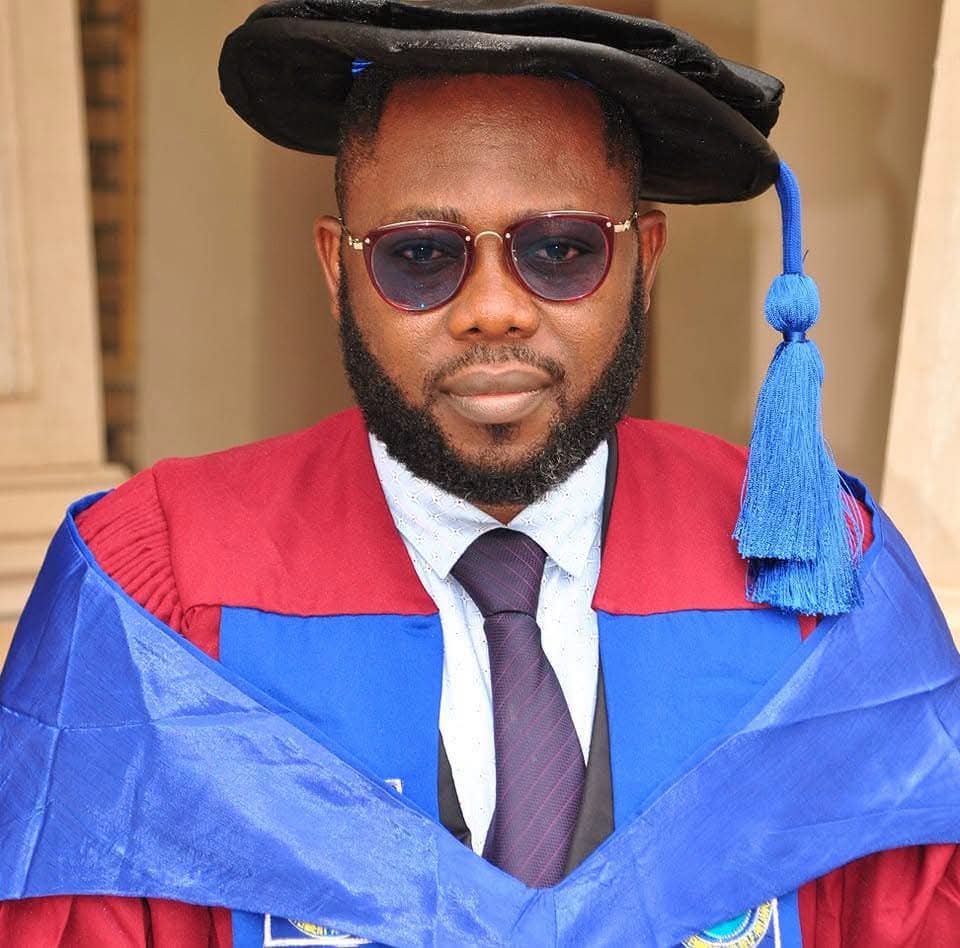
This is the troubling reality currently unfolding at Abia State University, Uturu (ABSU), where Professor Nnamdi Nwaeze, a distinguished Professor of Economics, finds himself facing victimisation, administrative intimidation, and persecution merely for exercising his right to freedom of expression.
Those who want to silence Professor Nwaeze should remember that Nigeria has walked this road before, and history has already rendered its verdict. Even under successive military regimes, when decrees replaced debate and detention without trial was the state’s preferred answer to criticism, Tai Solarin refused to be silent. He wrote, he criticised, he confronted power directly, and he paid for it in detention and harassment. He was not alone. Scholars and public intellectuals of that era, from the lecture halls of our universities to the editorial pages of our newspapers, continued to speak truth to power at considerable personal cost. Their courage during the darkest years of military rule contributed to the democratic governance we have in Nigeria today.
If scholars could find and raise their voices under generals and military decrees, what possible excuse can a university administration in a democratic dispensation offer for persecuting a professor? Suppressing Professor Nwaeze is not merely an institutional failure; it is a retreat from a battle Nigerian academics already won decades ago.
The irony deepens when one considers the wider climate in which this persecution is happening. Nigeria’s return to civilian rule in 1999 was sold to the world as a restoration of the very freedoms the military had crushed. Yet, decades later, the country’s civic space has been shrinking steadily rather than expanding. Journalists are harassed, bloggers are arrested, activists are detained, and criticism of those in power is increasingly treated as a crime to be punished rather than a contribution to be debated. The tools of coercion have been retained while the language has merely been updated: court injunctions and administrative panels have replaced decrees, and “invitations” from security agencies have replaced disappearances, but the objective remains the same: to silence divergent voices.
It is within this broader narrowing of civic space, therefore, that Professor Nwaeze’s ordeal must be understood. His ordeal at ABSU is not an isolated case of administrative victimisation; it is the campus version of a national habit of silencing dissent. A country that harasses its journalists and intimidates its activists will eventually watch its universities harass their professors, because impunity at the top always migrates downward. When free expression is squeezed in the public square, it does not simply disappear; it is pushed inward, until even the ivory tower begins to feel the squeeze and its occupants learn, against every instinct they were trained to honour, to keep their counsel.
The retreat from a military battle won to a democratic peace in which freedom is quietly surrendered would be a tragic and avoidable reversal. The generation that fought military dictatorship did not do so merely to bequeath to its children a civilian version of the same fear.
Professor Nwaeze’s plight raises a fundamental and deeply unsettling question for our educational system: if a university professor, equipped with decades of research, academic authority, and institutional tenure, cannot confidently express himself or critique societal and institutional failings, what then does our society expect of the young students who pass through the lecture halls of ABSU?
Academia was never meant to be an assembly line designed to churn out unquestioning conformists. Higher education flourishes on intellectual friction and constructive critique. Students learn far more from example than from textbooks alone; they observe whether their academic mentors stand tall in defence of truth or cower under the threat of administrative high-handedness. When an institution silences a university don, it sends a chilling and dangerous message to the entire student body: keep quiet, submit, and fall in line.
By suppressing its academic leaders and attempting to muzzle intellectual freedom, ABSU risks breeding a voiceless generation. It threatens to produce a cohort of graduates conditioned to accept injustice, fear critical inquiry, and remain passive observers in the face of leadership failures. A country cannot progress economically, socially, or politically when its primary intellectual engine is forcibly turned off.
When critical economic commentary and social criticism are treated as acts of treason rather than public service, the institution undermines its very mandate to serve the interests of the wider public.
The leadership of Abia State University must be reminded that academic freedom is not a benevolent gift graciously handed down by university administrators. It is a constitutional right guaranteed to every citizen and scholar, as well as the essential lifeline of tertiary education globally. Persecuting scholars like Professor Nnamdi Nwaeze does nothing to elevate the standard of learning; it only tarnishes the institution’s hard-won reputation and converts a citadel of academic excellence into an arena of administrative arbitrariness.
The victimisation of Professor Nnamdi Nwaeze must not be allowed to continue in silence. It is time for key stakeholders, including the ABSU Alumni Association, civil society organizations, journalists, and the broader public, to take a firm stand and demand an immediate end to the persecution of Professor Nwaeze. The civil society organizations that have valiantly resisted the closing of Nigeria’s civic space are needed now within the university gate.
Silencing scholars will never build a world-class university. It will only guarantee the intellectual impoverishment of the very society the institution was established to serve and enlighten. ABSU must retreat from this absurd threshold and reaffirm its commitment to freedom of thought, justice, and academic integrity.
Nwagbara Obinna Eze Chijioke is the executive director of Youth and Students Advocates for Development Initiative (YSAD) and a one-time secretary general of the Students Union Government, University of Nigeria, Nsukka.


