



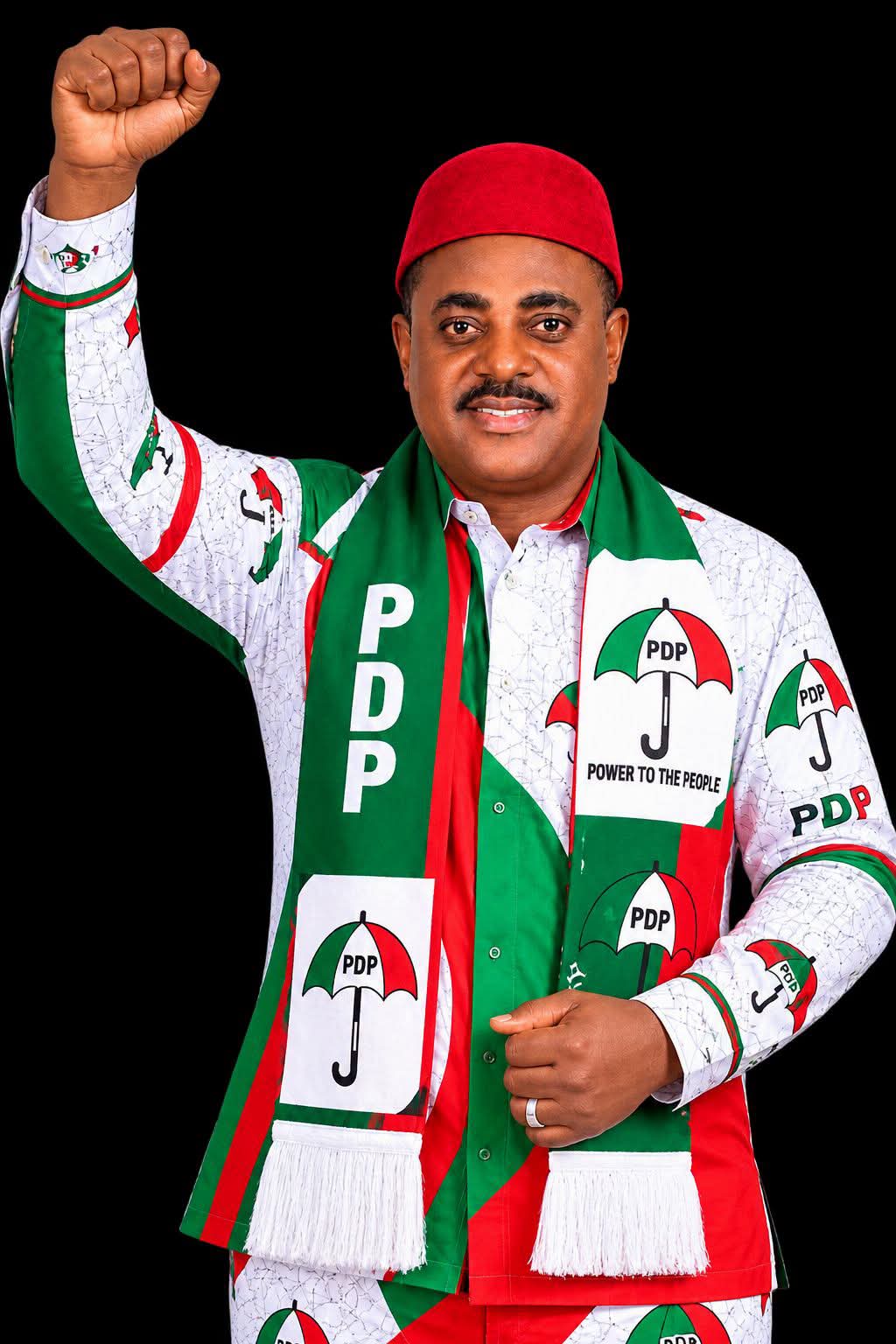
As 2027 approaches, the conversation about who should represent the Ohaji-Egbema, Oguta and Oru West Federal Constituency should go beyond personalities, political parties and the simple question of whose turn it is.
After sixteen years and four consecutive legislative cycles, we now have enough history to ask a more important question:
What has federal representation actually delivered across our three LGAs? What does that record tell us about Oru West? And, most importantly, how can the next four years deliver substantially more for everybody?
Our review deliberately concentrates on the sixteen-year period from 2011 to 2027, covering the tenures of Gerald Irona, Goodluck Nanah Opiah, Kingsley Chima Uju and Eugene Dibiagwu.
This does not mean that representation began in 2011. Oru West itself previously produced a Representative between 2003 and 2007. Neither are we suggesting that nothing happened between 1999 and 2011.
We chose the last four consecutive legislative cycles because they are immediately relevant to the decision before us in 2027, and because federal appropriation, NDDC and project monitoring records become increasingly available during this period, making meaningful project by project examination possible. Going much further backwards produces progressively weaker documentation and risks turning a serious development audit into an argument over political history.
WHAT DOES THE EVIDENCE SHOW?
What we have discovered is important.
Oru West was not completely absent from federal budgets during these sixteen years. In fact, that makes parts of its story even more concerning.
Projects carrying the names of Oru West communities were appropriated for in Abuja, but in too many instances, the available evidence raises questions about whether those appropriations ultimately became functioning assets on the ground.
In 2015, for example, the federal budget contained ₦40 million jointly for skills acquisition, training and empowerment for women and youths in Oguta and Oru West.
The evidence becomes even clearer during the 2019–2023 period.
Identifiable Oru West projects included approximately:
– ₦8.34 million for the Eke Mgbidi Market borehole;
– ₦13.3 million for Eke Mgbidi Market stalls;
– ₦8.87 million for Nkwo Ubulu Market stalls;
– ₦25 million for Ibiasoegbe solar streetlights;
– ₦100 million for a Youth Development Centre/Mini Stadium;
– ₦11.1 million for shops at Orie Ozara; and
– ₦40 million for the Nnempi–Ubulu Road.
Federal monitoring records, however, classify several of these, including the Eke Mgbidi borehole, Ibiasoegbe streetlights, Orie Ozara shops and the Youth Development Centre, as not started. Whether this is the case or not is not for me to say.
Particularly striking is the ₦100 million Youth Development Centre, for which the federal monitoring record shows approximately ₦25.64 million released, while still recording the project as not started.
Then consider the Nnempi–Ubulu Road.
Federal monitoring records show ₦40 million appropriated, ₦40 million released and ₦40 million spent, with the project recorded at 100 per cent progress.
Yet information from people familiar with the area disputes that physical completion and indicates that construction stopped during the period of insecurity after equipment was burnt.
That discrepancy should not become an excuse for accusations without evidence. Instead, it should become an argument for a completely different standard of representation:
Show us the appropriation.
Show us what was released.
Show us the contractor.
Then show us the completed project on the ground.
That should become the standard by which federal projects are judged.
THIS IS NOT AN ORU WEST PROBLEM ALONE
Fairness demands that we acknowledge that failed, delayed and abandoned projects were not exclusively an Oru West problem. We have found examples requiring scrutiny in Oguta and Ohaji-Egbema as well.
Nor should anybody resent the substantial interventions attracted to the oil producing parts of our constituency.
During the Opiah period in particular, a deliberate case was made for directing NDDC resources towards communities producing the oil. Opiah publicly explained in 2018 that he had worked from 2015 to ensure that NDDC interventions in Imo increasingly reached oil producing communities.
That was a legitimate strategy.
Ohaji-Egbema and Oguta bear particular environmental and infrastructural burdens associated with oil production. They should continue receiving the NDDC, host community, environmental remediation and petroleum related interventions to which their circumstances entitle them.
But therein lies an important lesson for Oru West.
While the oil producing areas understandably developed a strategy around the federal institutions particularly relevant to them, who was developing an equally relentless federal resource strategy around Oru West?
NDDC is only one door into Abuja.
There are federal resources for education, agriculture, healthcare, water, housing, roads, rural electrification, erosion control, markets, skills acquisition, industrial development, digital infrastructure, youth development and enterprise finance.
The evidence from the last sixteen years therefore raises a deeper question than simply how many projects Oru West received.
It asks whether Oru West has sufficiently converted the enormous opportunities available through the Federal Government into completed development on the ground.
THE CASE FOR ORU WEST MUST BE BIGGER THAN “IT IS OUR TURN”
That is why the case for Oru West in 2027 should not rest solely upon the familiar expression:
“It is our turn.”
Equity and rotation are legitimate considerations, and some political leaders from Ohaji-Egbema have themselves publicly advanced the argument that Oru West has had fewer opportunities to occupy the House seat than the other parts of the constituency.
But there is a much stronger proposition available:
An opportunity for Oru West to introduce a fundamentally different model of representation, being, Federal Resource Aggregation.
WHAT IS FEDERAL RESOURCE AGGREGATION?
A Federal Representative should not merely travel to Abuja, attend sittings, move motions and occasionally announce a constituency project.
The office can be organised as a professional Federal Resource Aggregation operation covering all 33 wards.
Before every federal budget is prepared, the needs of every community should already have been documented.
Projects should be developed and matched to the appropriate federal ministries, departments and agencies.
Appropriation opportunities should be pursued.
Once projects enter the budget, releases should be tracked, procurement followed, contractors monitored and implementation verified.
The Federal Government itself describes legislators as initiators of constituency projects, while MDAs remain responsible for their implementation.
Getting a project into the budget should therefore be the beginning of the Representative’s work, and not the end of it.
WHY FIGHT OVER TEN PROJECTS WHEN WE CAN PURSUE ONE HUNDRED?
This is where the proposition becomes potentially transformative for all three LGAs.
We should stop approaching federal representation as though Abuja contains ten projects and Ohaji-Egbema, Oguta and Oru West must quarrel over how those ten projects are divided.
Why fight over ten when effective resource aggregation can pursue fifty, one hundred or hundreds of interventions through different federal institutions?
Rather than redistributing scarcity, the objective should be to multiply opportunity.
An ambitious target could be to expand the constituency’s project and intervention pipeline many times over, potentially twenty fold or even fifty fold over four years, while recognising an important constitutional and practical reality: a Representative does not personally control federal expenditure and therefore cannot guarantee that every project pursued will ultimately be funded or implemented.
The responsibility of the Representative is to build the pipeline, pursue the opportunities, track the process, expose failures and relentlessly advocate for delivery.
WHAT WOULD THIS MEAN FOR THE THREE LGAs?
For Ohaji-Egbema, such a model could combine aggressive protection of NDDC entitlements with gas-based industrial development, environmental remediation, roads, healthcare, electricity, agricultural processing, skills development, local-content opportunities and federal enterprise programmes.
For Oguta, its oil and gas resources, agriculture, waterways, tourism potential and strategic location could underpin a much larger portfolio involving transport infrastructure, NDDC interventions, tourism, agriculture, power, healthcare, education and enterprise development.
And for Oru West, Federal Resource Aggregation should create the machinery to ensure that projects carrying names such as Mgbidi, Nempi, Ubulu, Ozara and Ibiasoegbe do not merely appear in federal documents but become assets that people can physically see, touch and use.
This completely changes the political proposition.
Oru West does not need Ohaji-Egbema to receive less for Oru West to receive more.
Neither does Oru West need Oguta to become weaker for Oru West to become stronger.
The objective should be for all three LGAs to receive substantially greater federal attention and intervention than they have received before.
If an Oru West son becomes Representative, he ceases to be the Representative of Oru West alone immediately he takes the oath of office.
He becomes the Representative of all 33 wards.
If, after four years, Ohaji-Egbema cannot demonstrate substantially increased federal interventions, that model of representation has failed there.
If Oguta cannot point to substantially increased projects and economic opportunities, it has failed there.
And if Oru West continues discovering projects in federal appropriation documents that cannot be found on the ground, it has equally failed there.
THE 33-WARD FEDERAL DEVELOPMENT REGISTER
This new philosophy should be accompanied by a 33-Ward Federal Development Register, publicly showing every significant project being pursued.
The register should show:
Community | Federal Agency | Appropriation | Amount Released | Contractor | Implementation Status | Beneficiaries
People should not have to rely on rumours or political propaganda to know what government has approved for their communities.
The standard should be simple:
Roads should be measured.
Boreholes should produce water.
Streetlights should work at night.
Schools should contain pupils.
Empowerment programmes should have identifiable beneficiaries.
And we should stop manufacturing impressive statistics by describing 2,000 beneficiaries of one programme as 2,000 projects.
One programme remains one programme.
Accountability requires honest numbers.
THE REAL LESSON OF THE LAST SIXTEEN YEARS
This, ultimately, is the substantive case Oru West can place before its brothers and sisters in Ohaji-Egbema and Oguta as 2027 approaches.
Sixteen years provide enough evidence to identify weaknesses in the development pattern.
Oru West has appeared repeatedly in federal appropriations, yet too many identifiable projects raise legitimate questions about physical delivery.
At the same time, the experience of the oil-producing areas demonstrates what determined engagement with the appropriate federal institutions can achieve.
The lesson is not resentment.
The lesson is to become better at attracting, tracking and delivering federal resources.
The proposition therefore need not be:
“Give Oru West the seat because it is our turn.”
There is a larger proposition:
Give serious consideration to an Oru West led representation built around a new development model, one committed to multiplying federal opportunities for Ohaji-Egbema, multiplying them for Oguta, multiplying them for Oru West, and publicly accounting for what reaches every one of our 33 wards.
After sixteen years, perhaps the most important change required is not simply a change in where the Representative comes from.
It is a change in what we expect representation to accomplish.
We should no longer fight over the existing cake.
THE NEXT ERA SHOULD BE ABOUT MAKING THE CAKE MUCH BIGGER
That is the promise, and the measurable challenge, of Federal Resource Aggregation.
I am and with all humility resolutely remain.
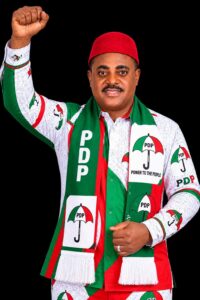
Hon. Chief Joseph Chukwuma Ikunna (JCI). The 2027 PDP Candidate for the Federal house of Representatives for Ohaji-Egbema, Oguta, and Oru West Federal Constituency.
30/09/26


