



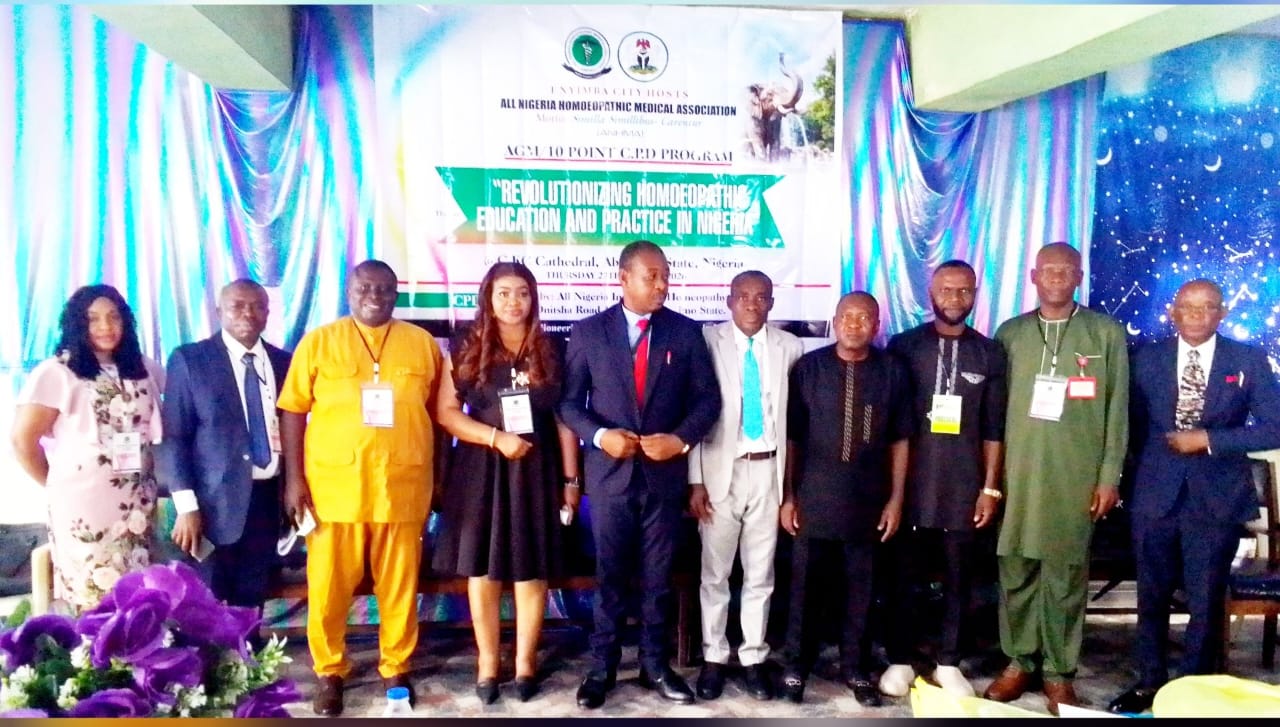
Homoepathic doctors in Nigeria, under their umbrella body, the All Nigeria Homoeopathic Medical Association (ANHMA), have said that they have a lot to offer and will equally improve the health sector in Nigeria, as well as the health conditions of the people.
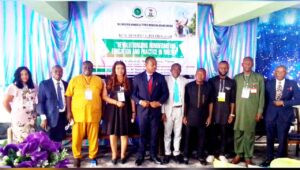
Our correspondent reports that the ANHMA made the statement during her 2026 Annual General Meeting (AGM)/Continuous Practice Development (CPD) programme themed, “Revolutionalising Homoepathic Education and Practice in Nigeria”, where the body urged the health authorities in Nigeria to give homoeopathy its rightful place so it can prove its worth to Nigerians.
Dr Victor Okoro, National President of ANHMA, said that what Nigeria stands to gain by embracing homoeopathy is too big to ignore. He added that things like cheaper healthcare, better chronic disease outcomes, less antibiotic resistance, and more jobs are part of it.
According to him, by not fully integrating homoeopathy, Nigeria is losing five critical things, including affordability and access to care, solutions to chronic and lifestyle diseases, reduced antibiotic resistance and drug side effects, primary healthcare extension and research, and job and medical tourism revenue.
He stressed that homoeopathy in Nigeria is growing, but it faces real challenges. According to him, acknowledging these challenges is the first step to solving them.
Okoro said that the challenges are real, but they are not insurmountable. According to him, “They are administrative, educational, and perceptual – not scientific.”
The ANHMA national president added that homoeopathy is not asking to replace allopathic (orthodox) medicine. But it is asking to stand beside it for the benefit of the Nigerian patient and therefore should not be subjected to such difficult challenges it is currently facing.
Okoro said that the number one challenge of homoeopathy in Nigeria is the case of lack of recognition. He said that in such a situation, what it now looks like is “where there is no separate council, no licence to practise, and quacks impersonate doctors.”
He said that the reasons behind this ugly situation are the fact that the Complementary and Alternative Medicine Council of Nigeria (Establishment) Bill, HB 473, which aims to institutionalise the regulation of Traditional, Complementary, and Alternative Medicine (TCAM) in the country, has not been passed by the National Assembly.
Okoro, however, stressed that another major challenge facing homoeopathy in Nigeria is the lack of understanding by both the government and the public on homoeopathic practice, stressing that policymakers in the country are yet to understand the difference between homoeopathy and herbalism.
He said that the solution to the challenges lies with fast-tracking the passage of the Complementary and Alternative Medicine Council Bill to create licensing, minimum standards, and discipline for homoeopathic practitioners.
He equally added that the ANHMA should partner with the National Council on Health (NCH), the highest policy-making body for the health sector, and the Federal Ministry of Health and Social Welfare (FMOH) to develop standard treatment guidelines and curriculum.
Adding his voice to the challenges facing homoeopathy in Nigeria, Dr Chima Ogbonna, Abia State chairman of ANHMA, said that their challenges are many but pointed to lack of acceptance and misprofiling as a major setback.
According to him, “homoeopathy is a postgraduate medical science. It has nothing to do with herbal medicine. Homoeopathy and herbal medicine practice are parallel lines that can never meet.
“Homoeopathy is purely scientific and proven using principles. It is supposed to run side by side with the conventional medicine as we have today. It should be given its place to function.
“The problem here is that over the years, they deliberately manufactured fictitious and unfounded stories against homoeopathic medicine just to ridicule it and make it appear inferior. Enough of the bad name-calling.
“This is a branch of medicine that was founded by a renowned German physician. So, it’s not even indigenous to us here. Go to Germany, India and the USA, and you’ll see the homoeopathic pharmacopoeia. It’s only in Nigeria that the suppression is too much.”


