





THE PUBLIC RECORD: RT HON. BARR. NKEIRU ONYEJEOCHA, PhD – A series on infrastructure, human development, and public value across Isuikwuato and Umunneochi
…Read as a record of constraints removed – not a list of works completed
Part I – The Roads That Changed Communities: Infrastructure, Connectivity and Economic Opportunity

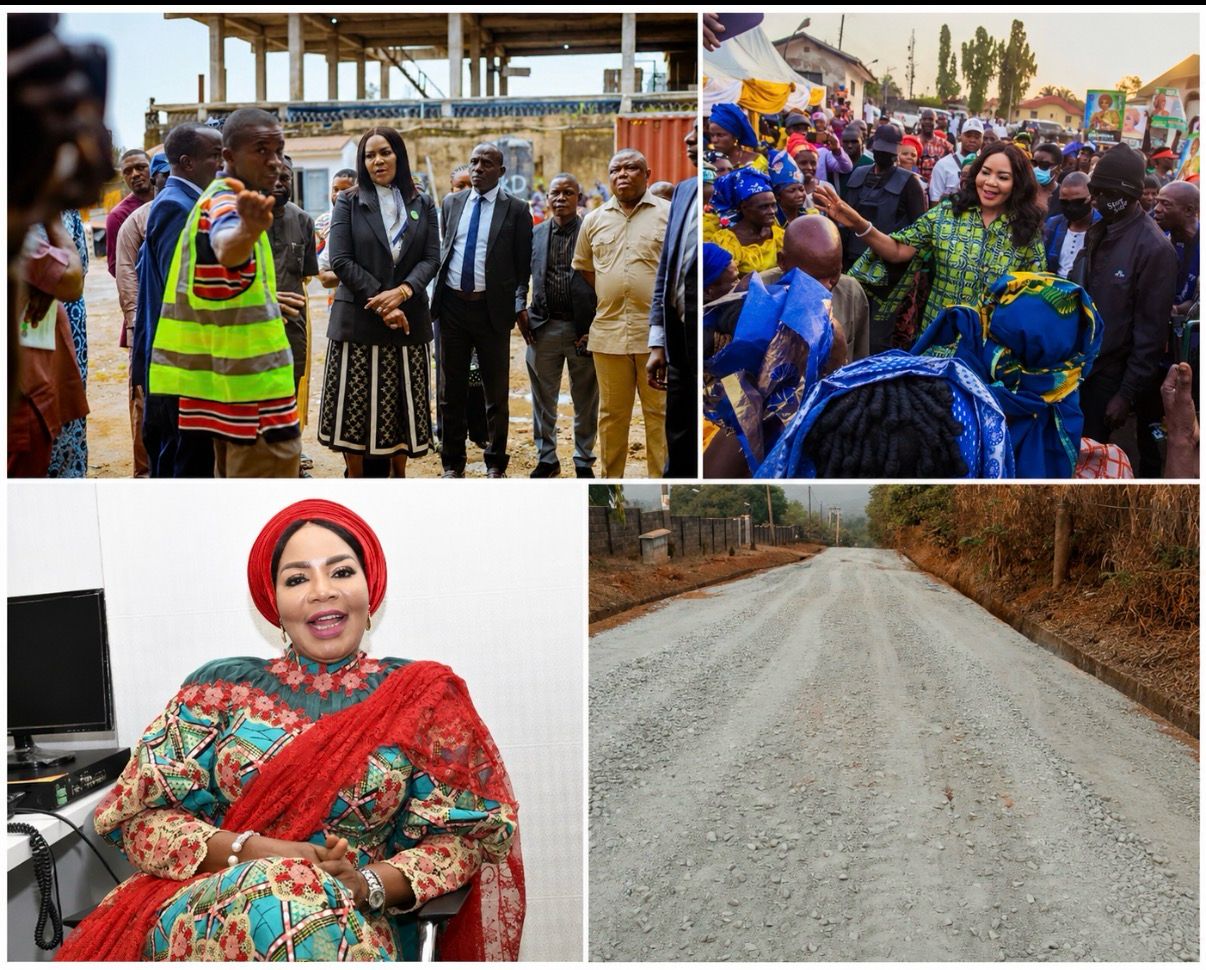
Political seasons are temporary. Public value endures. Every community lives within the limits of its own connectivity. Where a road ends, opportunity tends to end with it. The distance between a farm and a market, between a household and a clinic, between a child and a classroom, is rarely just a distance – it is a cost, paid daily, by people who did not choose where the road stopped. A community’s prospects are shaped less by what it produces than by whether what it produces can reach anyone.
This is why infrastructure deserves to be read not as a list of works but as a record of constraints removed. People see roads. Development sees access.
The Economics of Access
A poor road is a tax that no one votes on. It is collected in higher transport fares, in vehicles worn down before their time, in produce that spoils before it reaches a buyer, in the hours a trader loses and the customers a business never gains. The burden falls heaviest on those least able to absorb it — the smallholder farmer, the market woman, the parent travelling for care.
What a road removes, it removes for everyone at once. Travel times fall. Transport costs fall. Market friction eases. In their place come mobility, investment, rising land values, and the simple confidence that goods and people can move when they need to.
The road portfolio across the constituency should be read in those terms. The projects whose lengths are recorded – three kilometres at Uhuolugho/Amokwo/Mbato, over four at Umuogele/Achara Ugwueme, two at Amuda/Ngodo/Umuada, two at Obulo Eziama Nneato, two at Okpuhu Ihite, and a series of one-kilometre and farm-access stretches at Leru Umuchieze, Umuelem/Ihie, Mbezi Umuigwe and Umudike/Ugwuawuru – together total close to twenty kilometres, alongside more than a dozen further corridors recorded without stated length, among them Amaba, Amaibo, Amuda Ikpa Otamkpa, Umuada/Osisankpa, Obinagu, Obiagu Lekwsi, Amaidi/Ahioro and Eluama. Several remain marked ongoing, and more than thirty kilometres are recorded as identified but not yet awarded. That distinction matters: it tells the reader which gains are banked and which are still being built.
Each corridor connects somewhere to somewhere. A farm road is not a convenience; it is the difference between a harvest sold and a harvest lost.
Bridges as Development Multipliers
Most people see a bridge as a structure. A development economist sees it as the removal of a barrier that nature or terrain imposed and the community could not.
Where a river or a gully divides a community, the cost is not only inconvenience. It is the clinic reached too late, the school attended irregularly in the rains, the trade that simply does not happen because the journey is not worth it. A bridge converts a seasonal barrier into a permanent connection.
The record reflects this at two stages of the same logic. The Obulo Nneato Bridge is recorded as constructed — a barrier already removed. The Nmam/Achi crossing in Mbala Isuochi sits at the survey and design stage – a barrier studied and scheduled, not yet defeated. Naming the difference plainly is what separates a public record from a campaign poster.
Protecting Communities from Decline
Erosion control is widely misunderstood as drainage. It is not. It is asset protection.
Across South-Eastern Nigeria, gully erosion is among the most persistent threats to anything of value – homes, roads, farmland, and the businesses that depend on all three. Land lost to a gully is rarely recovered, and the road, the farm or the house lost with it represents value that was already paid for. To protect against erosion is to defend development that has already happened from being quietly undone.
The documented interventions follow that principle: the recovery of an erosion site and reconstruction of the road at Mgbelu Umunnekwu; work at the Oghighe/Urualla/Olukabi Oguduasaa erosion site; and the erosion-control drainage design and environmental impact assessment for the Abia State University–Uturu–Afikpo and Isuikwuato–Uturu roads. The same concern reached the legislative floor in a motion on gully erosion in the two local government areas. Protection and construction are not separate agendas. One builds value; the other keeps it.
Building Institutions, Not Just Infrastructure
A road moves goods. An institution moves disputes toward resolution, commerce toward order, and citizens toward their government. These are buildings only in the way a road is gravel.
The ultra-modern court complex at Umunneochi, housing the High Court, Magistrate Court and Customary Court, brings the administration of justice physically closer to the people it serves – which is, in practice, what access to justice means. The town halls for the Isuochi and Isuikwuato Town Development Unions, both recorded as ongoing, give civic life a place to organise itself. And the market infrastructure — the twenty-room lock-up shops at Ngodo and the forty-room shops at the Better Life market in Lokpanta – converts informal trade into something with an address, a roof, and a measure of permanence. Trade that has a place to happen is trade that can grow.
Infrastructure That Creates Wealth
There is a difference between a community that produces and a community that processes what it produces. The first sells raw value and watches it appreciate in someone else’s hands. The second captures that value at home – in jobs, in margins, in income that stays.
The oil mill and the rice processing facility at Achara, both recorded as constructed and equipped, are productivity assets of exactly this kind. They allow what is grown locally to be milled, processed and sold locally, and the question they raise is the one that matters most for the region’s future: what happens when communities stop exporting raw output and begin building value where they live? That is the point at which development stops being something delivered to a community and becomes something the community generates for itself.
Electricity belongs in the same category. The rural electrification at Achara and Umuakwua, the twenty-five 300kVA transformers distributed across the political wards, and the more than 2,500 solar street lights installed across communities are not amenities. They are the precondition for enterprise – for the workshop that can run a machine, the shop that can stay open after dark, the cold store that can hold a perishable good. Power is not the reward for development. It is one of its instruments.
The Enduring Character of Public Value
Reasonable people will disagree about politics. That is what a democracy is for. What is far harder to dispute is the value of a barrier removed.
Roads do not vote. Bridges do not campaign. Markets do not speak. Yet long after the arguments of any season have faded, a farmer still moves produce along that road, a family still reaches that clinic, a child still travels to that school, and a trader still opens that shop.
The work outlasts the noise around it.
That is the enduring nature of public value, and it is the only fair standard by which any record should finally be judged: not by the volume of what was said, but by the durability of what was built – and honestly accounted for.
To be continued in Part II:

THE PUBLIC RECORD: RT HON. BARR. NKEIRU ONYEJEOCHA, PhD -A road can carry a child to a school. Only a school can change what that child becomes
Part II – Building People, Not Just Projects-Education, Healthcare and Human Development
Part I described the infrastructure that moves goods and people. But the most enduring asset a community holds is not its roads – it is its people, and what they can do. Physical capital can be washed away by a gully or worn down by traffic. Human capital, once built, lasts a lifetime and is passed to the next generation. People see classrooms and clinics. Development sees capability.
Education as Infrastructure
A classroom is a productive infrastructure in the same sense that a road is. It is the structure through which a community’s future capacity is built. And like a road, its absence is a hidden tax, paid in potential that is never realised.
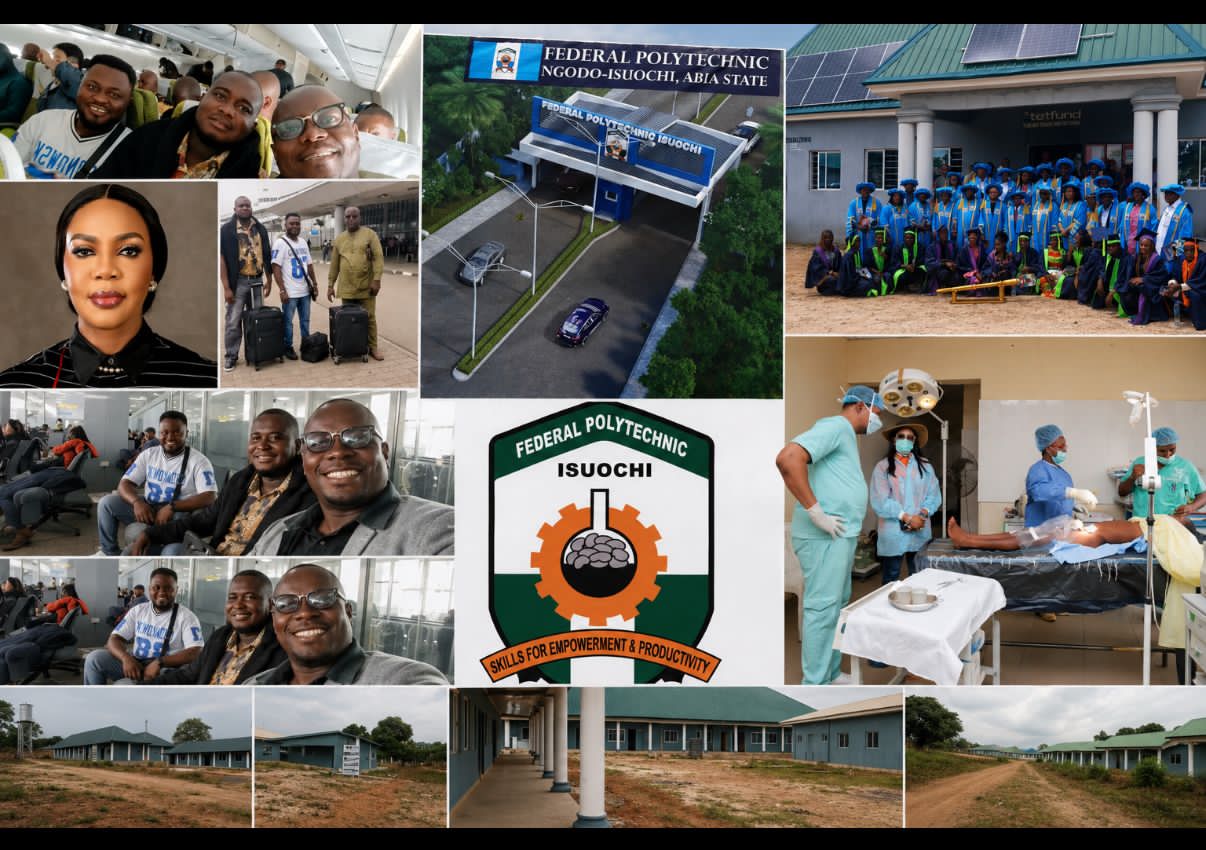
The educational record across the constituency is unusually broad. More than thirty primary and secondary schools are recorded as having received constructed or renovated classroom blocks and supplied furniture, from Eluama Secondary School and Methodist College Obilagu Ngodo to Achara Uturu, Mbala, Isuochi, Umuchieze and Lokpanta, down to village primary schools at Umuobi, Ndiawa, Aroikpa, Leru and Otamkpa. A school without a roof, a desk, or a book is a school in name only; furnishing it is what makes the building do its work.
Three interventions deserve particular attention, because each removes a specific barrier rather than simply adding a structure. The annual payment of WAEC fees for SS3 students addresses a quiet injustice; a child prepared for an examination but barred from sitting it by a fee is an opportunity destroyed at the final step. Scholarships across primary, secondary and tertiary levels extend that logic upward. And the skill acquisition centres at Umuada Ngodo and Isuochi Unity Square, together with the ICT centres at Isuochi Secondary School and the Isuikwuato Council headquarters, connect education to livelihood — the recognition that learning must eventually translate into the ability to earn.
The sponsorship of inter-school quiz
competitions and the supply of library materials to Leru, Ubahu and Mbala Umuobasi round out a picture in which the aim is not merely attendance but capability. An educated population is the one asset that compounds — its returns grow over a lifetime, and they do not depreciate.
Health as the Precondition of Everything
A community cannot learn, work, or build if it is sick. Health is not one development sector among many; it is the precondition for all the others. A child too ill to attend the furnished classroom gains nothing from it. A trader too unwell to reach the new market road earns nothing from it.
The health record follows the same access logic that governs roads, bringing care physically closer to the people who need it. Health centres are recorded as constructed at Ozara, Isunabo Uturu, and along the Amuda–Umuaku road, with further centres at Nneato and Lokpanta marked as ongoing. The Umunneochi General Hospital at Nkwaogu Isuochi was renovated, and basic drugs were supplied to the Ovim, Umuobiala and Uturu health centres. Proximity of care is not a comfort; in an emergency, it is the difference between an outcome and a tragedy.
But the single most defensible claim in the entire health record is also the simplest: a free annual medical mission, recorded as running for more than thirteen years, serving indigenes of both local government areas. Longevity is its credential. A one-off medical outreach is an event; one sustained across more than a decade is an institution. Set beside the distribution of wheelchairs to persons with disabilities, the supply of mosquito nets, and the payment of hospital bills for indigent constituents, the pattern is consistent; the removal of the barriers, financial and physical, that stand between an ordinary person and care.
Water as Quiet Health Infrastructure
Clean water is the most underrated form of healthcare because it works invisibly by preventing illnesses from ever occurring. A motorised borehole is a clinic that treats disease before it begins.
The boreholes recorded across the constituency – at Lomara, Afor Umuaku, Umumeze Amuda, Umuejegwo Umuaku, Obinolu Ngodo, Ovim, Ndiawa, Umunzeokoro, the Abia State University, and the health centre and secondary school at Nneato- serve two purposes. They reduce the burden of waterborne illness and the time required to return. In communities where water is fetched by hand, that labour falls disproportionately on women and girls, often at the cost of the very schooling described above. A borehole, in that light, is not only a health asset. It is hours given back to a household and, frequently, to a girl’s education.
The Compounding Asset
Roads can be measured in kilometres and bridges in spans. Human development resists that kind of accounting, because its returns are paid out over decades and in lives rather than in lengths.
The child who sat the examination because the fee was paid, the patient who survived because the centre was near, the girl who stayed in school because the water came to her, these are not line items. They are capacities that will be exercised long after any political season has ended, and passed to children not yet born. That is the quiet arithmetic of human development: it is the form of public value that grows after it is given.
Political seasons are temporary. Public value endures.


RT HON. BARR. NKEIRU ONYEJEOCHA, PhD – THE PUBLIC RECORD-A series on The Tools of a Livelihood Empowerment, Enterprise and Economic Agency
Part III-Development is finally measured at the level of a single household, by whether a person can earn.
Part I built the roads that carry goods to the market. Part II built the people who might one day run the enterprises that fill those markets. Part III concerns the step from putting capital directly into individuals’ hands to capability becoming income. People see a sewing machine. Development sees a small enterprise.
The Economics of a Tool of Trade
It is fair to ask a hard question of any record of distributed goods, because a sceptic will ask it first: Is this development, or is it merely the handing out of items? The honest answer turns on a single distinction, between consumption and capital.
A bag of rice is consumed; it is eaten and gone. A sewing machine is capital; it produces income every day it is used for years. The distinction is decisive, and most of what the record describes falls firmly on the productive side. More than 1,200 sewing machines, including industrial models, are recorded as distributed, each one the foundation of a tailoring enterprise. So too were more than 108 grinding machines, 58 vulcanising machines, 600 deep freezers, 300 motorcycles, 56 tricycles, and cassava processing machines donated to the Ulonna farm settlement. A tricycle is not a gift; it is a transport business. A freezer is not a luxury; it is a cold chain that lets a trader hold perishable stock. A grinding machine is a service that a community will pay for.
The proper test of such an intervention is durability: does the asset keep earning after the season that delivered it has ended? An item that generates recurring income passes that test, and an economy of small productive assets is, in aggregate, a denser and more resilient local economy than one dependent on a single employer or a single road. That is the frame in which this portfolio is best read, not as largesse, but as the widespread distribution of the means of production into private hands.
Employment, Credit and Shelter
Beyond tools, the record reflects the three other levers by which households climb: a job, a loan, and a roof. The facilitation of employment for more than 240 indigenes across ministries and parastatals represents direct entry into the formal economy, and, for each household involved, a recurring income rather than a one-time asset. The soft, interest-free loans extended to women and youth address the constraint that most often defeats a viable small enterprise: not ambition, but access to capital. And the construction of fifteen houses for indigent persons addresses the most basic constraint of all; it is difficult to build a livelihood without first having somewhere to live.
These are smaller in number than the distributed tools, and should be presented as such. But they address a different need, and, together with the tools, they describe a layered approach: capital for those who can trade, employment for those who can be placed, credit for those who can grow, and shelter for those with nothing to start from.
Sport as Social Infrastructure
A community is held together not only by its roads but by the occasions on which it gathers. The annual football tournament for the youth of the two local government areas, and the mini-stadium at Achara Isuochi, are modest entries in any ledger, but they serve a real function. Organised sport gives young people structure, channels rivalry into play rather than conflict, and provides a shared event that belongs to the whole community. Social cohesion is infrastructure, too; it is simply harder to photograph.
Capacity That Outlives the Giver
The deepest test of empowerment is whether it survives the person who provided it. A favour creates dependence. A capacity creates independence. A tailor with a machine, a rider with a tricycle, a household with a wage, a family with a home, none of these needs the giver again. The asset, the skill, and the income belong to the recipient, and they will go on producing long after the occasion that delivered them is forgotten. That is the difference between charity and development: charity is remembered; development is used. And use, repeated daily across thousands of households, is the most honest measure of public value. Political seasons are temporary. Public value endures.
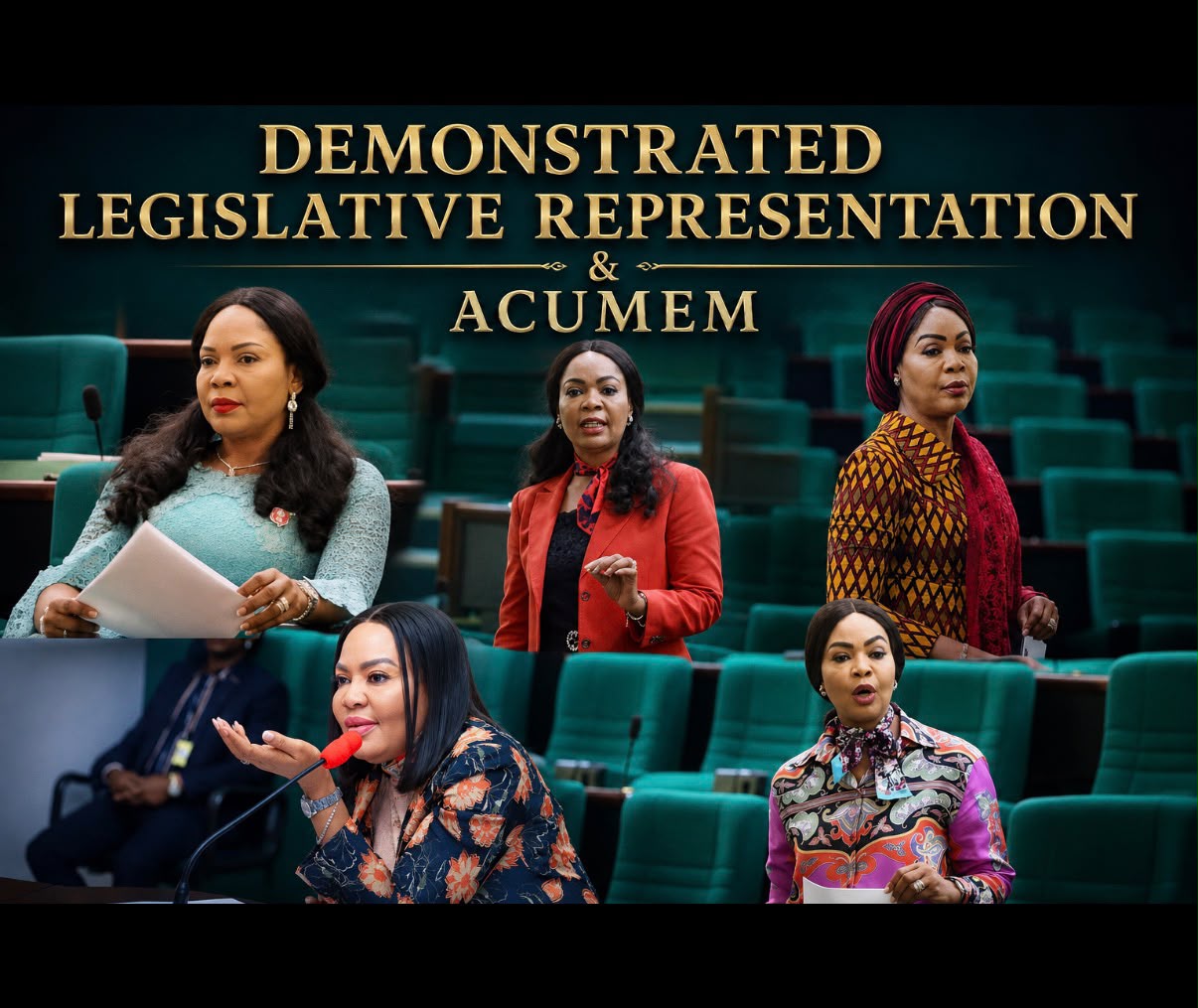

RT HON. BARR. NKEIRU ONYEJEOCHA, PhD – THE PUBLIC RECORD-The Legislative Record, Read Honestly across Isuikwuato and Umunneochi as a record of constraints removed – not a list of works completed.
Part IV – A series on The Law as Infrastructure
The most durable infrastructure a public servant can build is not made of concrete. A road must be maintained, a bridge inspected, a borehole repaired. A law, once passed and obeyed, needs no maintenance budget. It endures by being followed.
But a legislative record must be read with more discipline than any other, because the language of the legislature invites confusion. A bill is not a law. A bill at “First Reading” has merely been introduced; it stands at the very beginning of a long process, most of which it may never complete. An honest account must therefore separate two distinct things: the statutes that became law, and the proposals that expressed an agenda. To blur them is to forfeit the trust of any serious reader. To distinguish them is to earn it.
What Became Law
A handful of the recorded measures cleared every stage and received presidential assent. These are achievements in the full sense, and the record is strongest when it rests on them.
The *Anti-Torture Act 2017, assented in December 2017,* criminalises torture and other cruel, inhuman or degrading treatment, translating a constitutional principle into an enforceable statute. The *Compulsory Treatment and Care for Victims of Gunshots Act 2017*, also assented to in December, addresses a documented and deadly problem: hospitals that turned away gunshot victims for fear of police involvement, leaving the wounded to die at the gate. The Act compels treatment first. It is, in the most literal sense, a life-saving law. The *National Senior Citizens Centre Act*, assented in January 2018, established a national framework for the welfare of the elderly.
Two further measures of direct regional consequence are recorded as passed. The *Federal College of Education, Umunneochi* (HB 724) is a federal tertiary institution within the constituency itself, an asset whose value, like a university’s, compounds across generations. And the *South-East Development Commission* bill, co-sponsored with other members of the zone, created a dedicated vehicle for regional development across the South-East. The amendment to the *Tertiary Education Trust Fund Act* is recorded as reported out of committee, advanced well beyond introduction, though short of assent.
These are the load-bearing entries. A reader can verify them, and they stand.
What Was Proposed
The remainder of the record, the long sequence of bills marked “First Reading”, should be presented for what it is: a register of priorities, not a ledger of accomplishments. Read with that honesty, it is still informative because what a legislator chooses to introduce reveals what they believe matters.
The proposed bills cluster around recognisable themes. A substantial group concerns financial regulation and the economy, measures touching asset management, securitisation, payment systems, factoring, and investment promotion. Another concerns health, amendments relating to medical and dental practice, psychiatric hospital management, the national eye centre, rehabilitation therapists, and a hospital for women and children. A third concerns justice, protection and accountability; witness protection (revisited across several sessions); public officers’ protection; public interest disclosure for whistle-blowers; and ratification of the ECOWAS convention on small arms. Women’s development recurs, including the proposed measure relating to the Maryam Babangida National Centre.
The motions moved on the floor belong to the same register of stated concern: the attempted attack on students of a Methodist secondary school at Ovim; the killings of constituents and other Nigerians in South Africa; gully erosion in the two local government areas; gender parity and violence against women and girls; and the hazards posed by container-carrying trailers on the highways. A motion does not make law. It places a matter on the national record and demands a response, which is its own, lesser, function.
The Value of an Honest Ledger
It would be easy to present every introduced bill as an achievement and trust that few would check. The decision not to do so is itself the point. A record that distinguishes the statute from the proposal is a record that can be believed on both, and credibility, once a reader has tested it and found it sound, transfers to everything around it.
The laws that were passed will outlast every road in this series. A surfaced road serves until it wears; a statute against torture, or one compelling the treatment of the wounded, serves until it is repealed, and shapes conduct in places its author will never see. That is the highest form of public value: the kind that needs no maintenance, because it lives in the rules a society agrees to keep.
Political seasons are temporary. Public value endures.
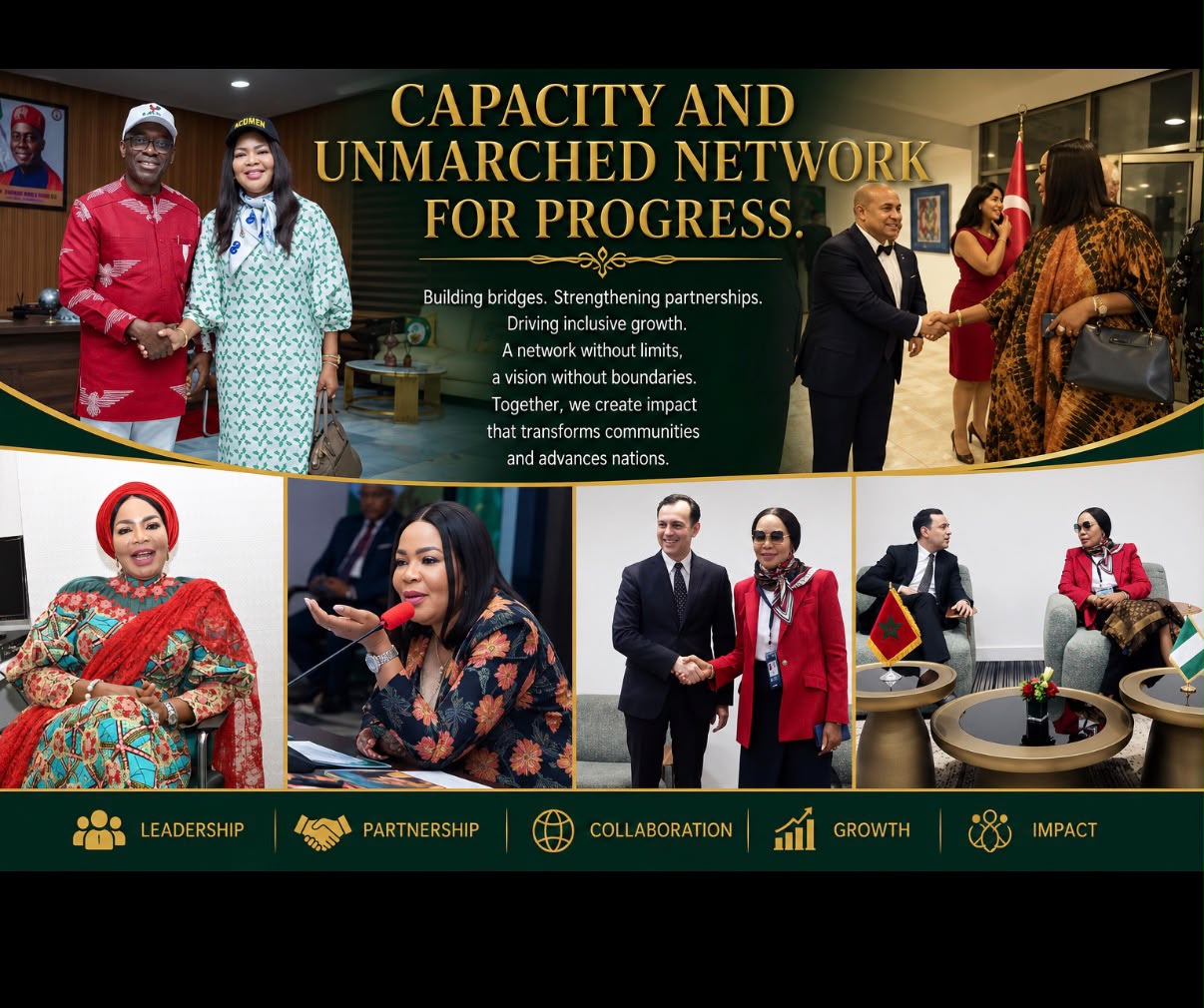

RT HON. BARR. NKEIRU ONYEJEOCHA, PhD – THE PUBLIC RECORD-What the Record Finally Means Across four parts, a single idea has done the work.
Part V – A series on The Sum of Constraints Removed
Development is not the quantity of things built. It is the number of constraints removed from the lives of ordinary people — and the record across Isuikwuato and Umunneochi is best understood as the sum of four kinds of constraint lifted at once.
The roads, bridges and erosion works removed the constraint of distance, the physical barriers that decided what could reach a community and what could leave it. The schools, clinics and boreholes removed the constraint of capability, building people who can learn, work and stay well. The tools, jobs and loans removed the constraint of capital, placing the means of earning directly into private hands. And the laws that passed removed constraints no road ever could, the ones written into the rules a society lives by.
None of these, by itself, is development. Together, they describe it. A road is wasted on a population too unwell to travel it; a clinic is wasted where no road reaches it; a sewing machine is idle without the skill to use it or the market to sell into; and all of it sits within a framework of law that decides whether any of it is safe, fair, or durable. The parts are only as valuable as their connection to one another, which is, in the end, the same lesson the very first road taught.
What can be fairly disputed in all of this is politics, and that is as it should be. What is far harder to dispute is the value of a barrier removed. Roads do not vote. Bridges do not campaign. Markets do not speak. Yet long after the arguments of any season have faded, a farmer still moves produce, a family still reaches care, a child still sits the examination, a tailor still works the machine, and a law still protects someone who will never know whose hand wrote it.
That is the enduring nature of public value. It asks for no credit, keeps no calendar, and answers to no season. It is used daily, quietly, by people getting on with their lives.
Political seasons are temporary. Public value endures.


